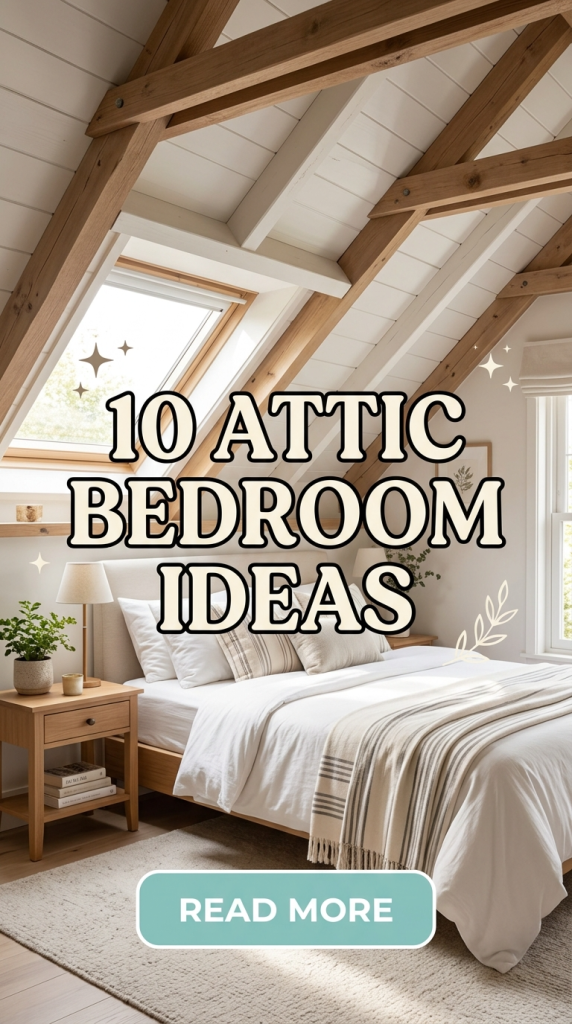
Attic bedrooms have become a popular design concept across Pinterest ideas because they transform underused roof spaces into comfortable and stylish living areas. Many homes contain attic spaces that remain empty or used only for storage. With thoughtful planning and creative design, these areas can become cozy bedrooms that maximize the available square footage of a home. Sloped ceilings, exposed beams, and unique architectural shapes often give attic bedrooms a distinctive charm that is difficult to replicate in standard rooms.
Pinterest inspiration frequently highlights attic bedroom designs because they combine practicality with aesthetic appeal. The angled ceilings create opportunities for creative layouts, built-in storage, and decorative lighting. These features allow homeowners to design rooms that feel intimate and personalized. Attic bedrooms are also ideal for minimalist layouts because the compact space encourages thoughtful organization and efficient furniture placement.
This article presents ten attic bedroom ideas that demonstrate how to transform attic spaces into comfortable sleeping environments. Each idea explores a specific design approach and includes clear guidance on how to implement the layout effectively. Readers will learn how to organize furniture, incorporate storage solutions, and enhance the visual appeal of the room. With careful planning and the right materials, attic bedrooms can become inviting retreats that combine comfort, organization, and modern design.
Why This Idea Is Trending or Useful
Attic bedroom designs continue to trend across Pinterest inspiration boards because they make efficient use of unused areas within a home. Many houses contain attic spaces that remain underutilized due to sloped ceilings or limited headroom. Converting this space into a bedroom provides additional living area without requiring major structural expansion. This practical advantage makes attic bedrooms especially appealing for homeowners seeking budget friendly solutions for extra space.
The design flexibility of attic bedrooms also contributes to their popularity. Slanted ceilings create unique architectural features that can become focal points in the room. Exposed beams, skylights, and angled walls provide opportunities for creative decoration and lighting arrangements. These distinctive elements often appear in trending ideas because they produce visually interesting interiors.
DIY appeal is another reason attic bedroom designs are widely shared online. Many homeowners enjoy transforming attic spaces through creative projects such as installing shelving, arranging furniture under sloped ceilings, or adding decorative lighting. These projects allow individuals to customize their rooms according to personal style.
Attic bedrooms also align with minimalist design trends. The limited space encourages careful furniture selection and organization, which results in clean and uncluttered environments. This aesthetic appeals to individuals seeking both comfort and efficient living spaces.
Materials and Preparation
Preparing to create an attic bedroom requires careful planning and an understanding of the structural features of the attic space. The first step involves evaluating ceiling height and identifying areas where furniture can be placed comfortably. Sloped ceilings may limit standing space, so lower furniture such as platform beds, storage benches, or small desks often work best in these environments.
Common materials used when designing attic bedrooms include compact furniture, shelving units, and lighting fixtures. Built-in shelves are especially useful because they can fit into angled spaces along the walls. Storage bins or drawers can also be placed under the bed to maximize organization.
Lighting is an important consideration because attic spaces may receive limited natural light. Skylights, wall sconces, or LED strip lights can improve brightness and create a welcoming atmosphere. Soft lighting often enhances the cozy aesthetic commonly associated with attic bedrooms.
Preparation also includes selecting color palettes and décor elements that complement the architectural features of the attic. Light colors can make small spaces appear larger, while natural materials such as wood accents can highlight exposed beams or slanted ceilings.
With thoughtful planning and appropriate materials, attic bedrooms can become functional and visually appealing spaces that support both relaxation and organization.
MAIN IDEAS
Idea 1: Cozy Attic Reading Bedroom
How to Create
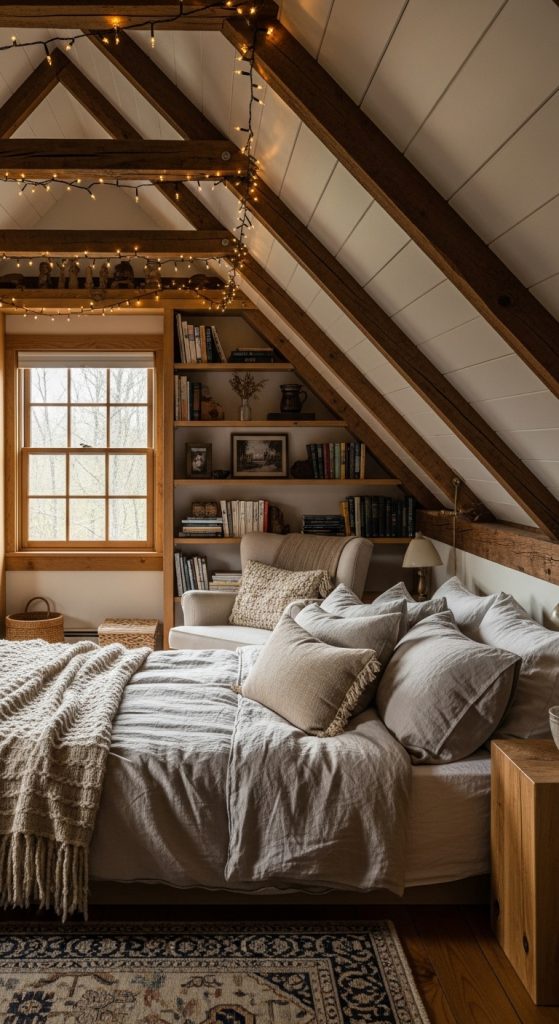
A cozy attic reading bedroom combines a sleeping area with a quiet corner dedicated to relaxation and reading. Attic spaces often create a naturally intimate environment due to their lower ceilings and enclosed structure. This atmosphere is ideal for designing a calm retreat where rest and leisure activities coexist. Soft bedding, comfortable seating, and warm lighting can transform the room into a peaceful environment.
Pinterest ideas frequently showcase attic reading bedrooms because they highlight the comfort and charm of attic architecture. Sloped ceilings can frame the bed while leaving space for a small reading chair or floor cushion nearby. Adding a bookshelf along the wall helps organize reading materials while contributing to the decorative aesthetic of the room.
This design works especially well in smaller attic spaces where large furniture may not fit comfortably. Instead of overcrowding the room, the layout focuses on essential elements that encourage relaxation. The result is a bedroom that feels warm, personal, and inviting.
Step-by-Step Guide
Begin by placing a low platform bed in the area with the greatest ceiling height.
Position a comfortable chair or floor cushion near a wall where reading materials can be stored.
Install a small bookshelf or wall shelf for organizing books.
Add a warm reading lamp or soft lighting to create a relaxing atmosphere.
Idea 2: Minimalist Attic Bedroom
How to Make
A minimalist attic bedroom focuses on simplicity and efficient use of space. The design uses only essential furniture and emphasizes clean lines and neutral colors. This approach works particularly well in attic environments because limited headroom encourages thoughtful organization.
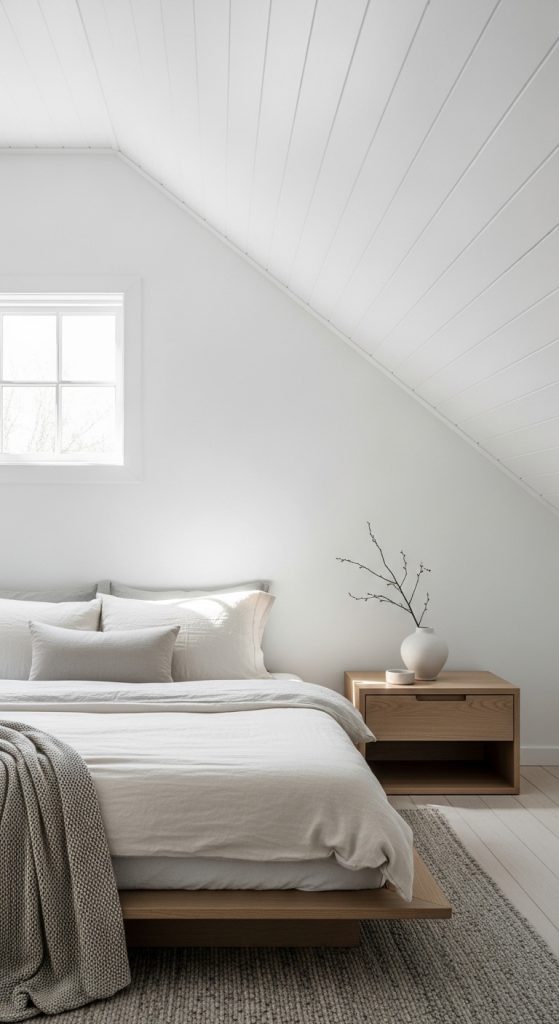
Pinterest inspiration often features minimalist attic bedrooms because they create a calm and uncluttered atmosphere. Neutral bedding, light wall colors, and simple décor allow the architectural elements of the attic to remain the focal point.
Step-by-Step Guide
Choose a low bed frame that fits beneath the sloped ceiling.
Keep furniture minimal by including only essential pieces such as a small bedside table.
Use neutral colors for bedding and walls to enhance the sense of spac
Idea 3: Skylight Attic Bedroom
How to Create
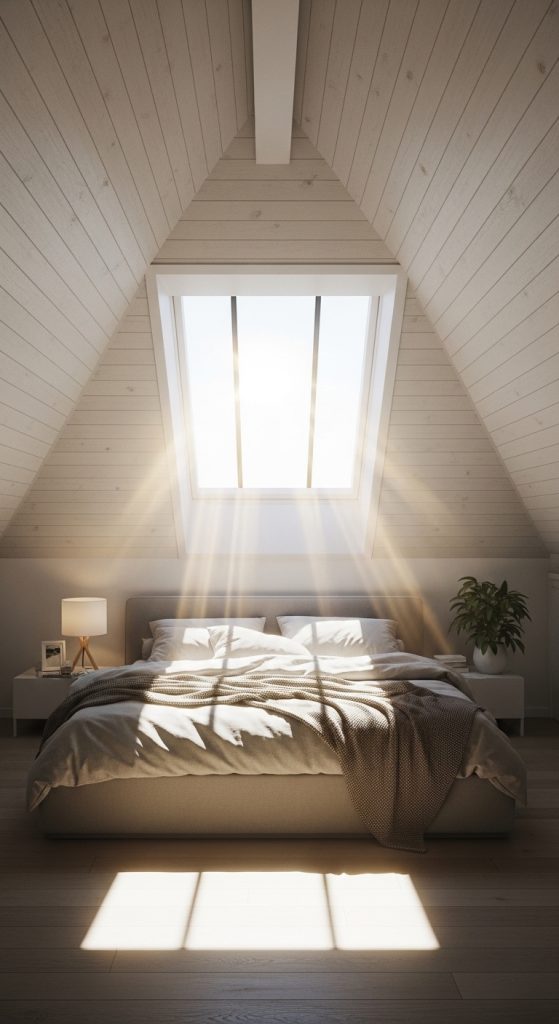
A skylight attic bedroom focuses on maximizing natural light within the attic space. Because attics often sit directly beneath the roof, skylights can be installed to bring daylight into the room from above. This design transforms the attic into a bright and airy bedroom while preserving the unique architectural character of the sloped ceiling. Natural lighting is one of the most desirable features in attic bedrooms because it visually expands the room and improves the overall atmosphere.
Pinterest ideas frequently highlight skylight attic bedrooms because they combine functionality with aesthetic appeal. Sunlight entering from the ceiling creates dynamic lighting patterns throughout the day. This natural illumination reduces the need for artificial lighting during daytime hours and makes the room feel more open. Skylights also offer views of the sky, which can enhance the relaxing environment of a bedroom.
Another benefit of this design is energy efficiency. Natural light reduces dependence on electrical lighting and contributes to a pleasant daytime environment. When placed strategically above the bed or seating area, skylights can become a central design element in the attic bedroom.
Step-by-Step Guide
Begin by identifying a suitable section of the roof where a skylight can be installed safely.
Position the bed beneath or near the skylight to take advantage of natural lighting.
Add lightweight curtains or blinds to control sunlight when necessary.
Arrange furniture so that the skylight remains the visual focal point of the room.
Idea 4: Attic Bedroom with Built-In Storage
Execution Process
An attic bedroom with built-in storage focuses on using the angled walls to create efficient organization. Sloped ceilings often leave low areas along the edges of the room that cannot accommodate tall furniture. These spaces are ideal for installing built-in cabinets, drawers, or shelving units. By integrating storage into these lower sections, the room remains functional while maintaining a clean layout.
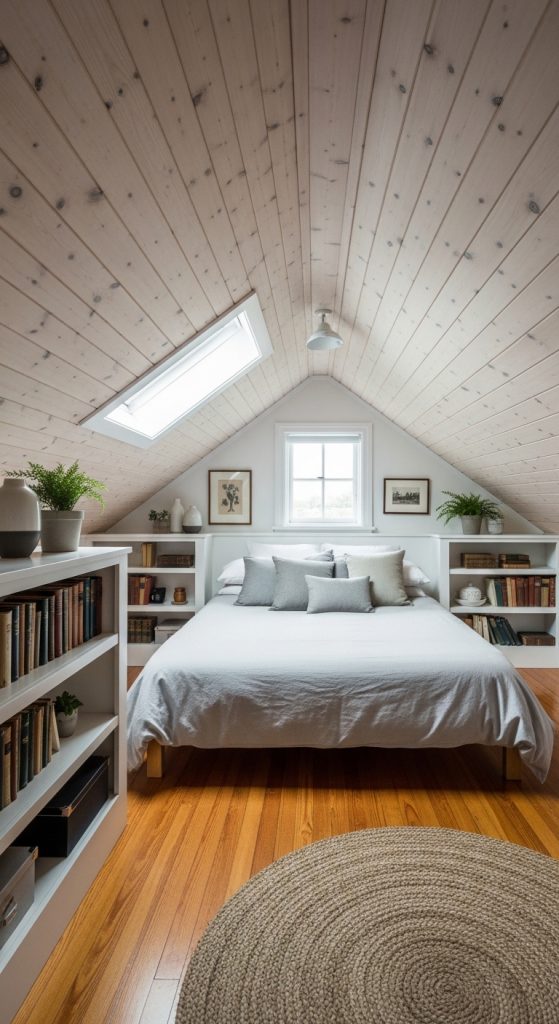
Pinterest inspiration boards frequently feature built-in storage solutions because they maximize limited attic space. Built-in furniture blends seamlessly with the architecture of the room and prevents clutter. This design also supports minimalist style principles by keeping personal items neatly organized and out of sight.
Another advantage of built-in storage is durability. Custom shelves or cabinets can be designed to match the exact dimensions of the attic walls. This ensures that every available area is used effectively while preserving the aesthetic balance of the bedroom.
Step-by-Step Guide
Measure the lower sections of the attic walls where headroom is limited.
Install built-in shelves or drawers along these areas to create storage.
Use the shelves for books, clothing, or decorative objects.
Keep the central area of the room open for the bed and essential furniture.
Idea 5: Rustic Attic Bedroom with Exposed Beams
How to Make
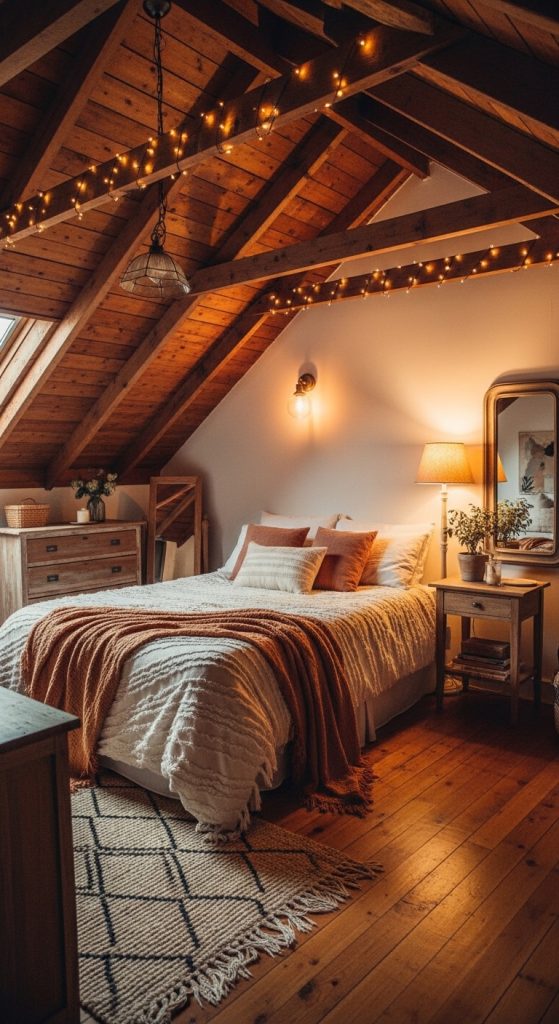
A rustic attic bedroom emphasizes the natural architectural elements often found in attic spaces. Many attics include wooden roof beams that support the structure of the house. Instead of covering these beams, the rustic design highlights them as decorative features. Exposed wood beams create warmth and character while contributing to a traditional aesthetic.
Pinterest ideas frequently showcase rustic attic bedrooms because the exposed wood adds visual texture and depth. Wooden beams pair well with natural materials such as linen bedding, woven rugs, and wooden furniture. This combination creates a comfortable environment that feels connected to nature.
Rustic attic bedrooms are particularly effective in homes where the architectural structure already includes wooden framing. The design celebrates the existing materials rather than concealing them.
Step-by-Step Guide
Clean and restore exposed wooden beams so they become visible design features.
Choose furniture made from natural materials such as wood or linen.
Use warm lighting to highlight the texture of the beams.
Add simple décor elements such as woven rugs or neutral bedding.
Idea 6: Modern Attic Bedroom with Neutral Colors
Setup Method
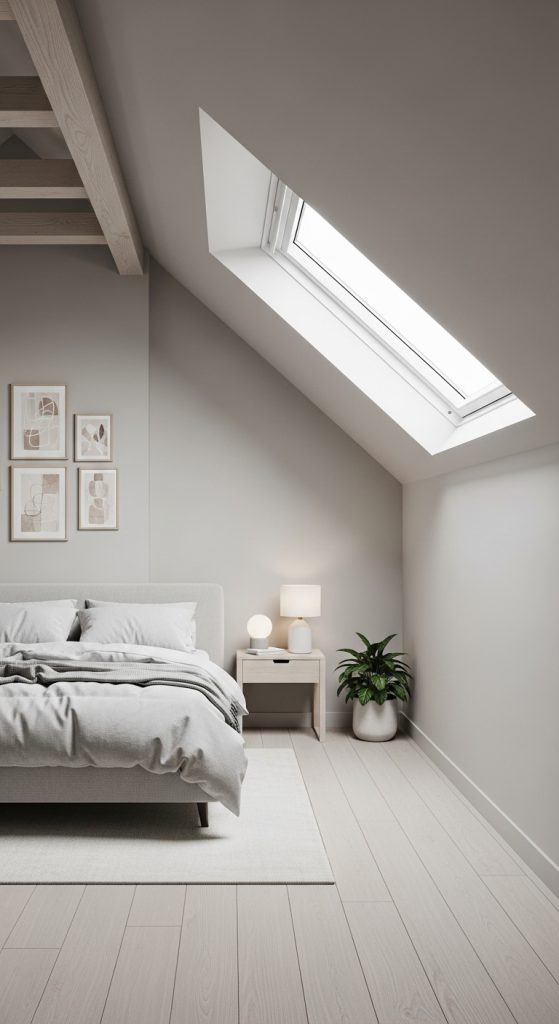
A modern attic bedroom uses a neutral color palette and streamlined furniture to create a calm environment. Light colors such as white, beige, or soft gray help reflect light and make the attic space appear larger.
Step-by-Step Guide
Paint walls in light neutral shades.
Use simple modern furniture with clean lines.
Limit décor to a few carefully chosen elements.
Idea 7: Attic Bedroom with Workspace
How to Create
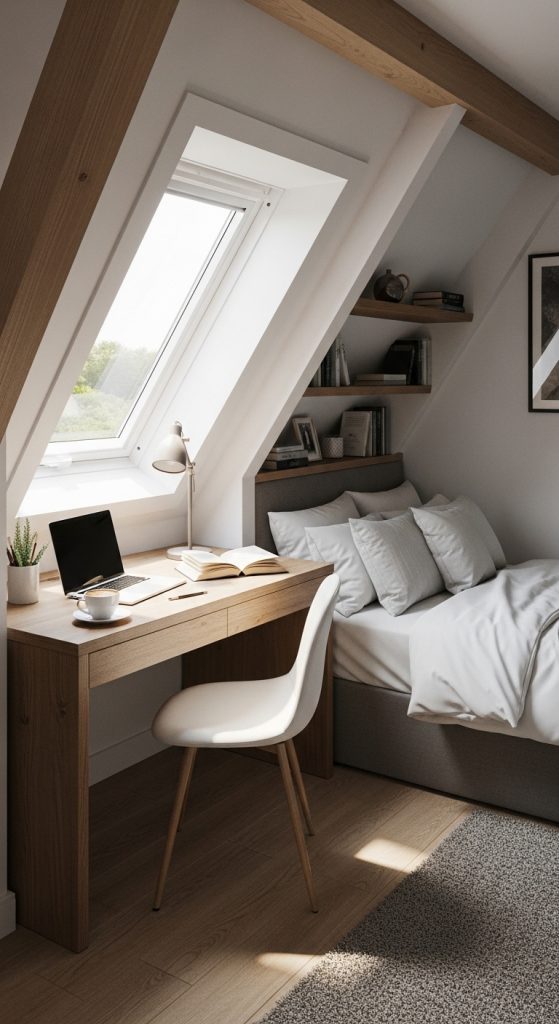
This design includes a small desk area within the attic bedroom. The workspace fits beneath the sloped ceiling while leaving the center of the room for sleeping.
Step-by-Step Guide
Place a compact desk beneath the lower ceiling section.
Add a desk lamp and shelves for study materials.
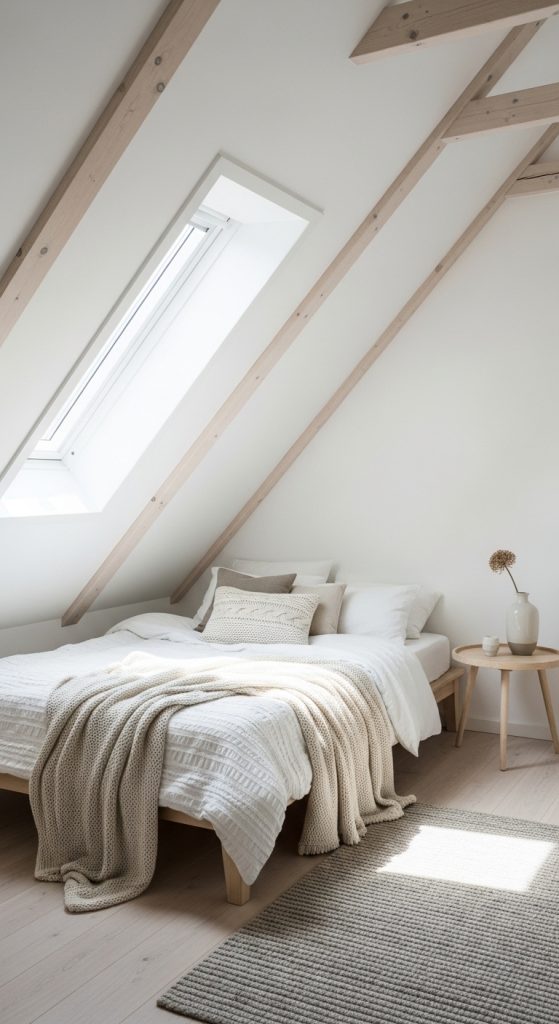
Idea 8: Scandinavian Style Attic Bedroom
How to Make
Scandinavian design emphasizes natural light, simple furniture, and soft textures.
Step-by-Step Guide
Use light wood furniture and white walls.
Add soft textiles such as blankets and rugs.
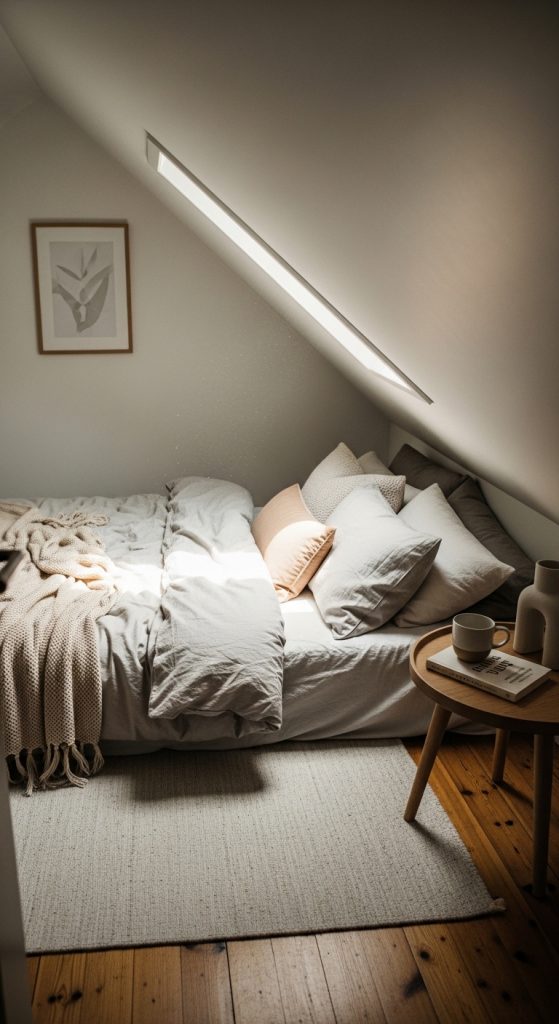
Idea 9: Small Attic Bedroom with Floor Bed
How to Create
A floor bed design works well in attics with limited ceiling height. The bed sits directly on a low platform or mattress base.
Step-by-Step Guide
Place a low bed beneath the highest section of the ceiling.
Keep surrounding furniture minimal.
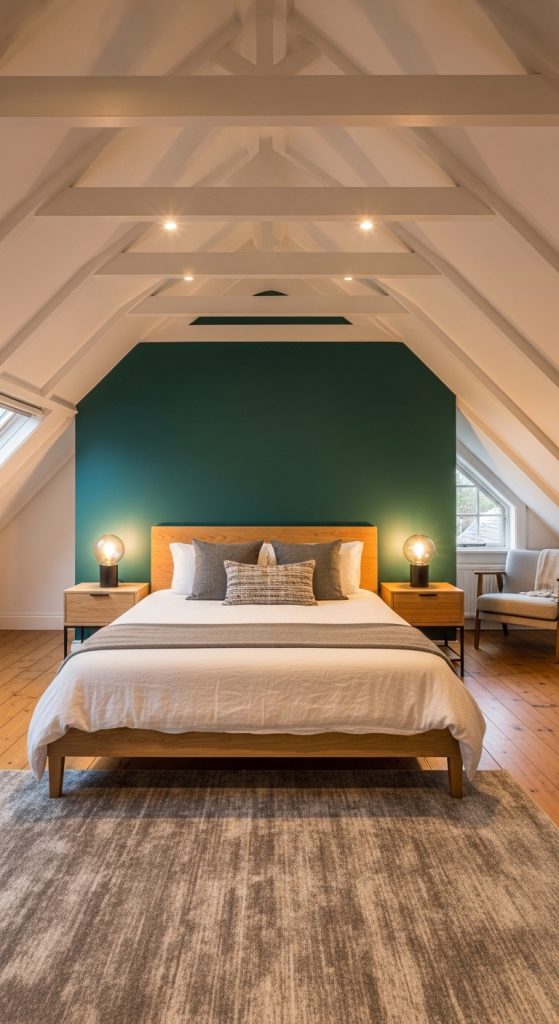
Idea 10: Attic Bedroom with Accent Wall
How to Create
An accent wall adds visual interest to the attic bedroom without overcrowding the space.
Step-by-Step Guide
Choose one wall and paint it a contrasting color.
Keep the remaining walls neutral.
Common Beginner Mistakes and How to Avoid Them
One of the most common mistakes when designing an attic bedroom is ignoring the limitations created by sloped ceilings. Placing tall furniture in areas with limited headroom can make the room feel cramped and uncomfortable. Instead, furniture should be selected based on the height of the ceiling in each section of the attic. Low-profile beds, storage drawers, and compact tables are often better suited for these spaces.
Another mistake involves insufficient lighting. Many attics receive limited natural light, which can make the room feel darker than other areas of the home. Adding skylights, wall lamps, or LED lighting can improve brightness and make the room more comfortable.
Poor ventilation is also a frequent issue in attic spaces. Because attics are located near the roof, temperatures can fluctuate significantly. Ensuring that the room has adequate ventilation or insulation helps maintain a comfortable environment.
Finally, overcrowding the room with furniture can reduce functionality. Attic bedrooms benefit from simple layouts that emphasize open floor space and efficient organization.
Practical Tips for Better Results
Successful attic bedroom design begins with careful planning of the room layout. Identifying the highest point of the ceiling helps determine where the bed should be placed. This ensures comfortable movement within the room and prevents awkward furniture placement.
Using multifunctional furniture can improve efficiency in smaller attic spaces. Storage beds, benches with hidden compartments, or foldable desks allow the room to remain organized without adding unnecessary items.
Color choices also influence the overall atmosphere of the attic bedroom. Light colors reflect natural light and help make the space appear larger. Soft textiles such as rugs and blankets can add comfort without taking up much space.
Lighting should also be layered throughout the room. Combining overhead lights with bedside lamps or wall sconces helps create balanced illumination.
Styling, Presentation, or Organization Ideas
Styling an attic bedroom involves enhancing the natural architectural features of the space. Sloped ceilings, exposed beams, and skylights can become focal points within the design. Highlighting these elements rather than hiding them helps preserve the unique character of the attic.
Wall decorations should remain minimal to avoid clutter. Small framed artwork or simple shelves can add personality while maintaining a clean appearance.
Textiles also play an important role in attic bedroom styling. Soft blankets, layered bedding, and decorative pillows create a cozy atmosphere that complements the intimate size of the room.
Organizational tools such as baskets or storage boxes help keep the room tidy. These items allow personal belongings to remain accessible while maintaining visual order.
Budget or Time Planning
Budget planning for an attic bedroom conversion often focuses on lighting, furniture, and storage solutions. Many attic bedroom designs can be achieved using existing furniture combined with small adjustments such as additional shelves or new bedding.
Time planning is also important when organizing the space. Installing built-in storage or skylights may require additional preparation and construction time. Smaller design changes such as rearranging furniture or adding décor can often be completed quickly.
Homeowners should prioritize essential elements first, including comfortable bedding, lighting, and ventilation. Decorative features can be added gradually once the basic layout is complete.
Creative Expansion and Advanced Inspiration
Attic bedrooms offer opportunities for creative interior design because of their unusual architectural shapes. Some homeowners incorporate custom shelving along the sloped walls to create a built-in library effect. Others install skylights or dormer windows to increase natural light.
Another creative approach involves using contrasting textures such as wood, linen, and soft fabrics. These materials add depth to the room while maintaining the cozy atmosphere typical of attic spaces.
Accent lighting can also enhance the room’s design. LED strips placed along beams or behind shelves can highlight architectural features and create a modern visual effect.
By combining thoughtful organization with creative décor choices, attic bedrooms can evolve from simple storage spaces into comfortable and stylish living environments.