Neutral bathroom ideas focus on creating a calm, clean, and functional space using soft tones such as beige, white, cream, and light gray. These designs are widely featured in Pinterest ideas because they offer a balanced combination of simplicity and visual clarity. Neutral bathrooms support a minimalist style while allowing flexibility in materials, textures, and layout. This article provides a complete tutorial on how to design and organize a neutral bathroom step by step. Readers will learn how to select materials, arrange elements, and apply practical design techniques that improve both appearance and usability. These ideas are useful because they help maintain a tidy and organized environment while reducing visual clutter. Neutral color palettes also reflect light effectively, making spaces appear larger and more open. The focus remains on beginner friendly approaches that allow easy project execution using accessible materials. This makes neutral bathroom design a reliable and adaptable option for modern home decor inspiration.
Why This Idea Is Trending or Useful
Neutral bathroom designs are trending across Pinterest inspiration boards due to their strong connection with modern design and minimalist style. These spaces provide practical value by creating a clean and organized environment that supports daily routines. Neutral tones reduce visual distraction, making the bathroom feel more relaxing and functional. This design approach also allows flexibility, as neutral colors can be combined with different textures and materials without disrupting the overall aesthetic. The DIY appeal is significant because many neutral bathroom updates can be completed using simple changes such as reorganizing items, updating textiles, or adjusting layout. This supports budget ideas and efficient planning. These designs are accessible for beginners because they rely on basic principles such as balance, symmetry, and consistency. Neutral bathrooms also photograph well, which contributes to their popularity in aesthetic and trending ideas. This combination of practicality, adaptability, and visual appeal makes neutral bathroom styling a useful and widely adopted approach.
Materials and Preparation
Preparing a neutral bathroom design requires organizing materials, tools, and layout planning. Common materials include neutral-colored tiles, light wood or simple cabinetry, soft textiles such as towels and rugs, and minimal decor elements. Tools may include cleaning supplies, measuring tools, storage organizers, and installation tools for fixtures or accessories. Begin by decluttering the space to create a clean base for design. Remove unnecessary items and focus on essential elements such as storage, lighting, and functional surfaces. Planning involves selecting a consistent neutral color palette and identifying focal points such as the vanity or shower area. Consider lighting conditions to ensure the space remains bright and balanced. Organize materials into categories such as storage, textiles, and decorative items to simplify the process. This preparation step ensures that the design remains cohesive and easy to execute. Proper planning improves efficiency and supports a structured approach to creating a neutral bathroom.
Idea 1: Minimal Beige and White Bathroom Setup
How to Create
This design combines beige and white tones to create a clean and balanced bathroom environment. Beige adds warmth, while white enhances brightness and clarity. This combination supports a minimalist style and creates a visually open space. The design focuses on reducing unnecessary elements and maintaining a structured layout. Smooth surfaces and simple shapes contribute to a clean and organized appearance. This approach works well in both small and large bathrooms, as it enhances light reflection and creates a sense of space.
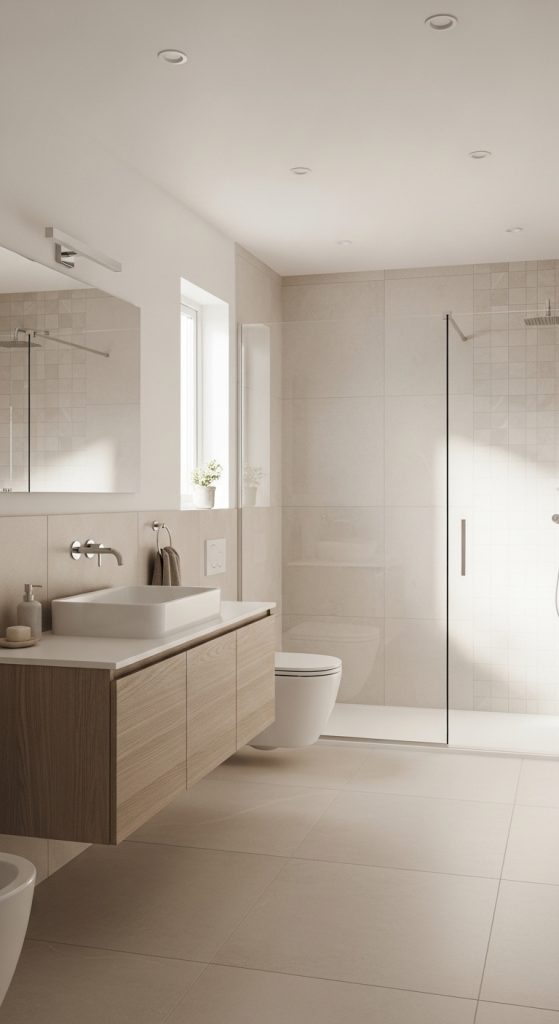
To create this setup step by step, start by selecting white tiles or wall paint as the base. Introduce beige elements through towels, rugs, or cabinetry. Keep fixtures simple and consistent in color. Arrange items in a symmetrical layout to maintain balance. Use storage solutions to keep surfaces clear and organized. This easy project relies on basic materials and simple planning to achieve a cohesive and modern result.
Idea 2: Neutral Bathroom with Wooden Accents
How to Create
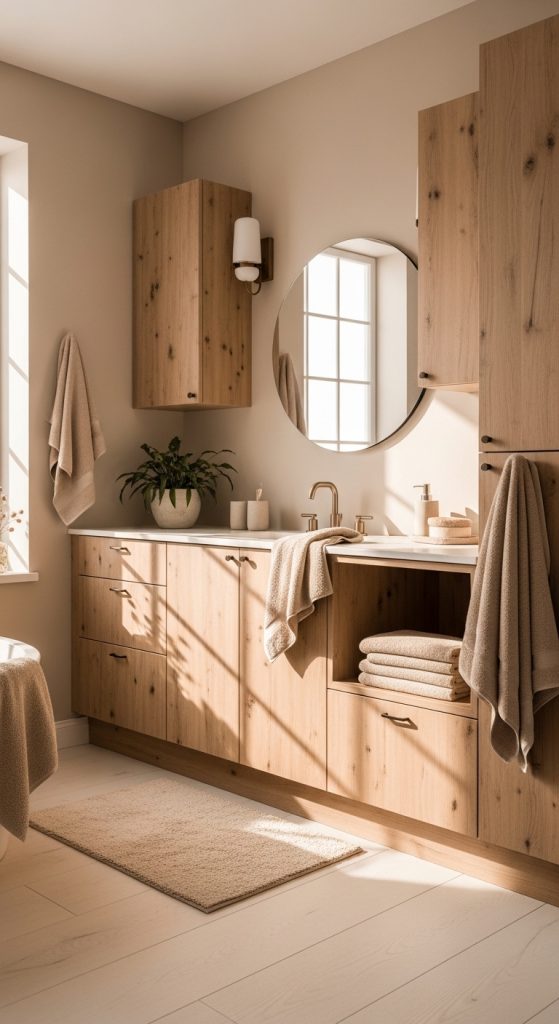
This design introduces natural wood tones into a neutral palette, adding warmth and texture. Wood elements balance the coolness of neutral colors and create a more inviting atmosphere.
To achieve this look, incorporate wooden shelves or cabinets. Pair them with neutral walls and simple fixtures. Maintain consistency in color and texture for a cohesive design.
Idea 3: Soft Gray Neutral Bathroom Design
How to Create
Gray tones provide a subtle alternative to beige and white, creating a calm and structured appearance. This design supports a modern and clean aesthetic.
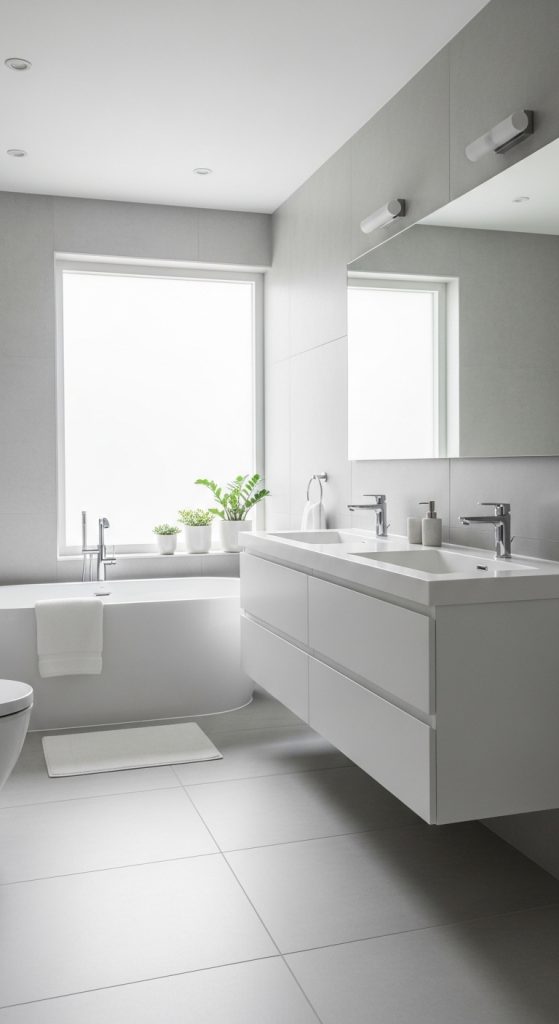
Use gray tiles or paint as the base and combine with white fixtures. Keep decor minimal and focus on functionality.
Idea 4: Neutral Bathroom with Open Shelving
How to Create
Open shelving improves organization while maintaining a clean look. It allows easy access to essential items without cluttering the space.
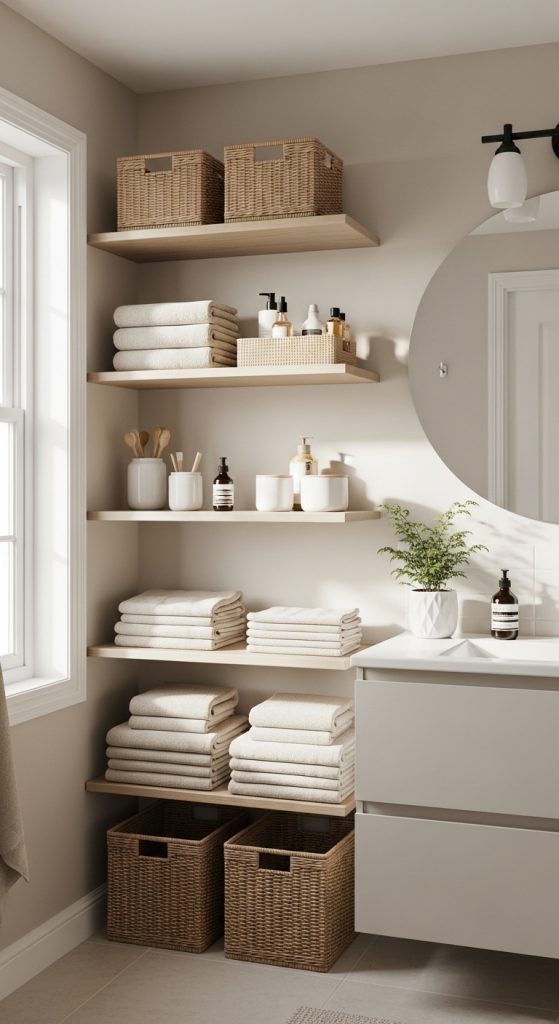
Install simple shelves and arrange items neatly. Use neutral containers to maintain consistency.
Idea 5: Neutral Bathroom with Textured Elements
How to Create
Texture adds depth to a neutral bathroom without introducing strong colors. Materials such as stone or woven textiles enhance visual interest.
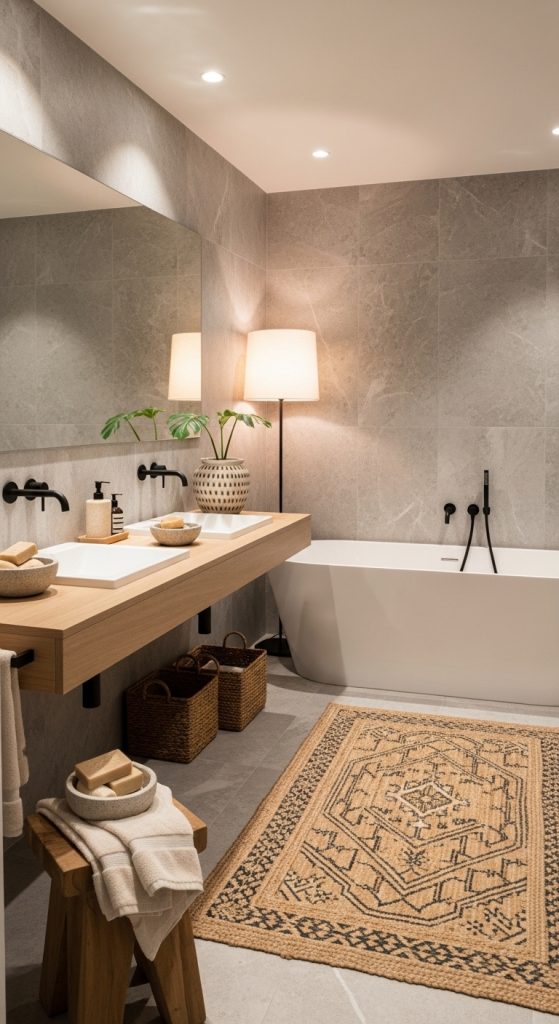
Incorporate textured rugs, tiles, or accessories. Keep colors consistent to maintain balance.
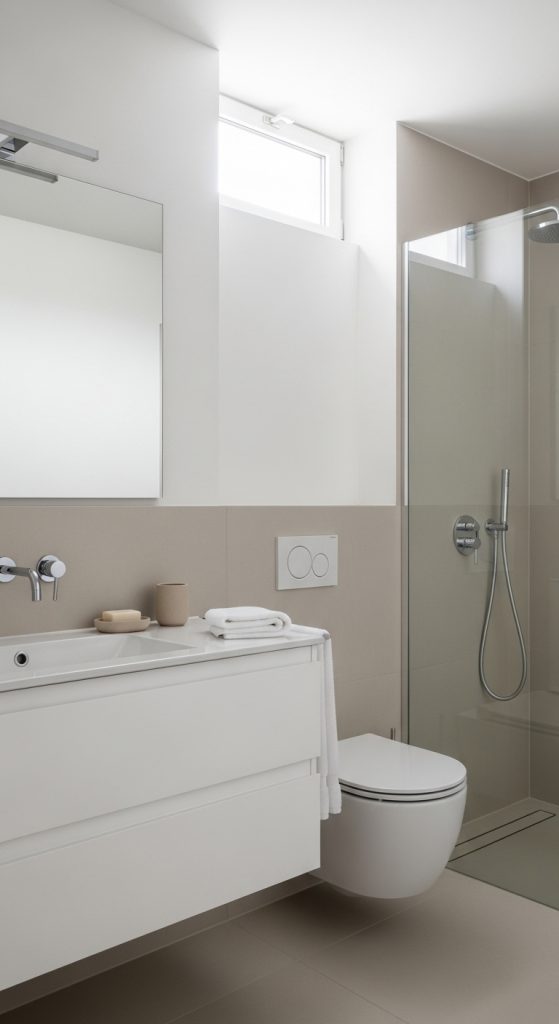
Idea 6: Neutral Bathroom with Minimal Decor
How to Create
This design focuses on reducing decoration to essential items only. It creates a clean and uncluttered environment.
Remove unnecessary items and keep surfaces clear. Use simple decor pieces sparingly.
Idea 7: Neutral Bathroom with Glass Elements
How to Create
Glass elements enhance light and create a more open appearance. They support a clean and modern design.
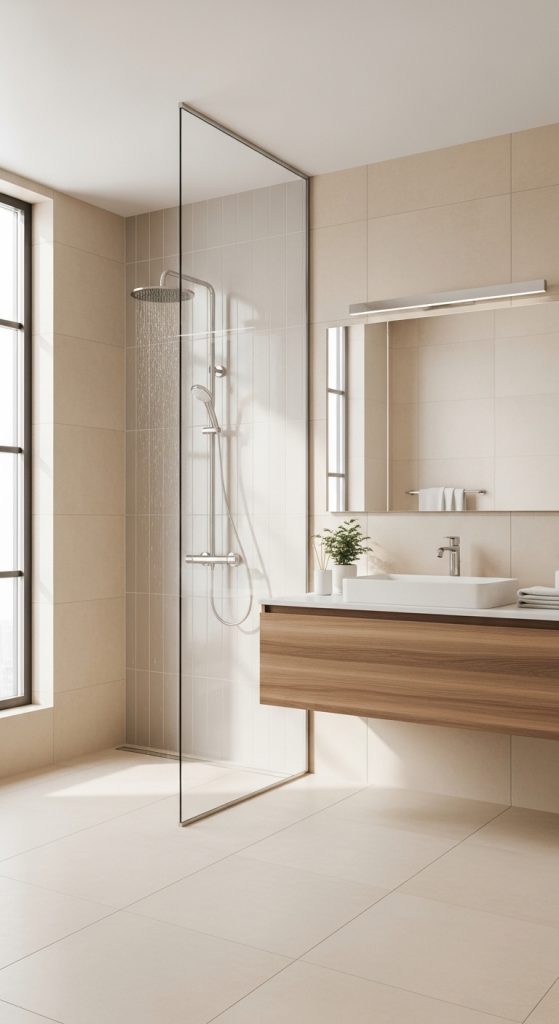
Use glass partitions or containers. Maintain a simple layout for clarity.
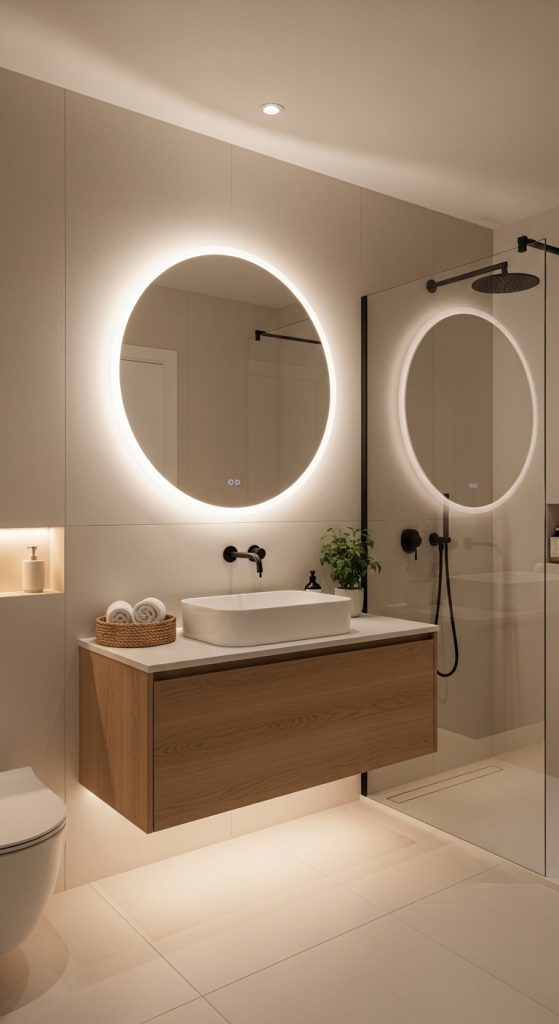
Idea 8: Neutral Bathroom with Layered Lighting
How to Create
Layered lighting improves functionality and enhances the overall atmosphere. It ensures balanced illumination.
Use a combination of overhead and task lighting. Position lights to reduce shadows.
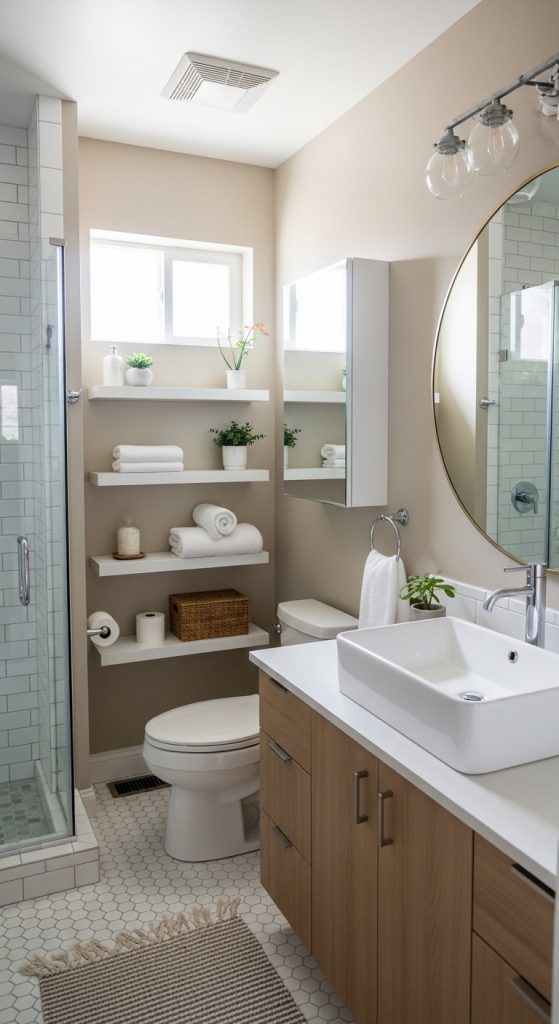
Idea 9: Neutral Bathroom with Compact Layout
How to Create
This idea focuses on maximizing space in smaller bathrooms. It uses efficient organization and minimal design.
Arrange essential items carefully and use storage solutions to reduce clutter.
Idea 10: Neutral Bathroom with Symmetrical Design
How to Create
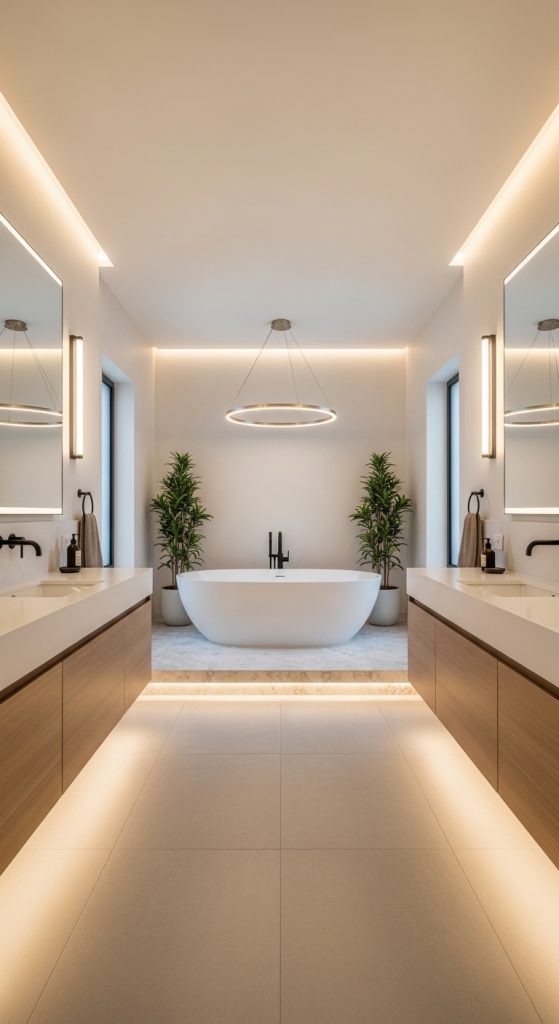
Symmetry creates balance and order in a bathroom. It enhances visual consistency and organization.
Position elements evenly on both sides of a focal point. Maintain equal spacing for a clean look.
Common Beginner Mistakes and How to Avoid Them
One common mistake is using too many different shades, which disrupts the neutral palette. Maintaining consistency in color selection is essential. Overdecorating can reduce the clean appearance, so limiting decorative items is important. Poor lighting choices may create uneven brightness, so proper lighting planning is necessary. Ignoring storage solutions can lead to clutter, affecting the overall design. Careful planning and organization help prevent these issues.
Practical Tips for Better Results
Focus on combining textures rather than adding new colors. Use natural materials to enhance warmth. Keep surfaces organized and clutter-free. Maintain a consistent layout for better functionality. These steps improve both usability and appearance.
Styling, Presentation, or Organization Ideas
Arrange items neatly to maintain a clean aesthetic. Use neutral containers for storage. Present the bathroom in good lighting to highlight design details. This approach enhances visual clarity and organization.
Budget or Time Planning
Use existing materials where possible to reduce costs. Plan updates in stages to manage time effectively. Focus on essential changes first to improve efficiency.
Creative Expansion and Advanced Inspiration
Experiment with subtle variations such as combining different neutral tones or adding layered textures. Introduce small design elements while maintaining balance. These creative ideas allow further development while preserving the minimalist style.