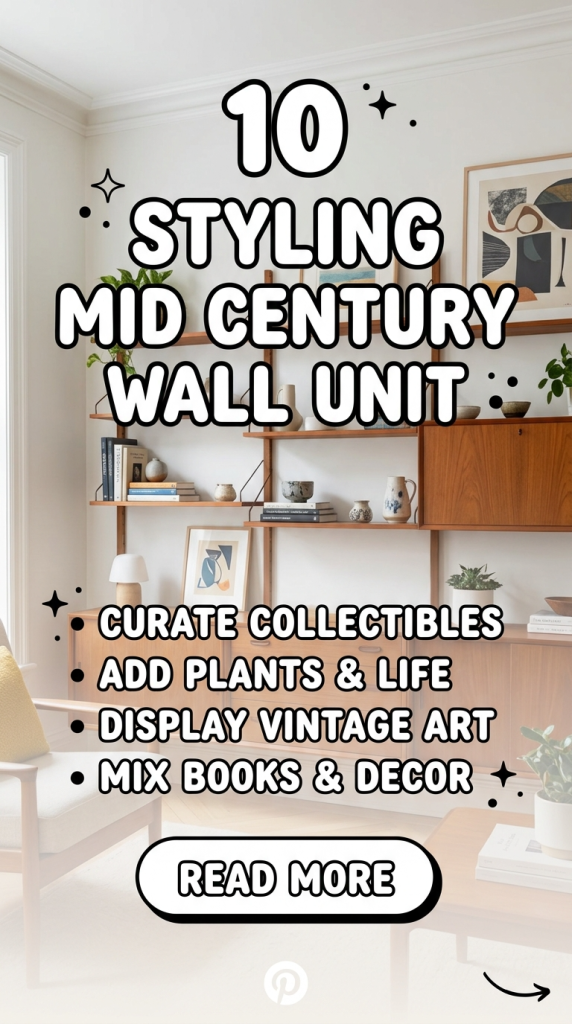
A mid-century wall unit is one of the most iconic furniture pieces in interior design. Popular during the 1950s and 1960s, these modular shelving systems were designed to combine functionality with clean, minimalist style.
Today, mid-century wall units are still widely loved because they offer both storage and a beautiful display area for décor. Their sleek wooden frames, open shelving, and geometric structure make them a perfect focal point in living rooms, offices, and even bedrooms.
One of the biggest advantages of a mid-century wall unit is its flexibility. The shelves can hold books, plants, artwork, and decorative objects, allowing you to create a display that reflects your personal taste.
However, styling a wall unit well requires balance. Too many items can make the shelves look cluttered, while too few can make the space appear empty. The key is combining different textures, heights, and colors to create visual interest while keeping the clean mid-century aesthetic intact.
Mid-century design often focuses on natural materials, earthy colors, and simple shapes. Wood tones such as walnut, teak, and oak are commonly paired with ceramics, glass, metal accents, and greenery. When styling your wall unit, it helps to keep this design philosophy in mind. Mixing vintage pieces with modern décor can also create a unique and personalized look.
Another important styling technique is layering. Instead of placing objects in a straight line across the shelf, try layering books, artwork, and decorative items to create depth. Varying heights and shapes also helps keep the display visually dynamic.
In this guide, you will discover ten creative ways to style a mid-century wall unit. Each idea includes materials you may use and step-by-step guidance to help you design a beautiful and balanced display that complements the timeless style of mid-century furniture.
1. Book and Object Balance
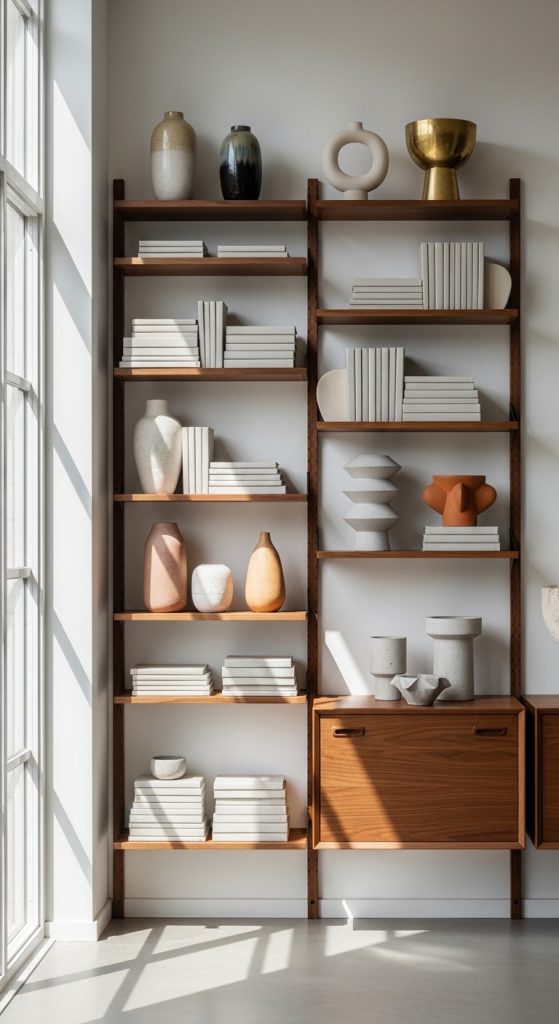
Books are one of the easiest and most classic ways to style a wall unit.
Materials Needed
- Hardcover books
- Decorative bookends
- Small sculptures or objects
- Ceramic vases
How to Style
Start by placing books both vertically and horizontally on different shelves. Stacking some books horizontally helps create platforms where you can place decorative items like small sculptures or vases.
Use bookends to keep upright books organized. Choose simple or vintage-style bookends to match the mid-century aesthetic.
Add one decorative object next to the books to break up the rows and add visual interest. Avoid overcrowding the shelves.
This styling approach creates a balanced look that feels organized and sophisticated.
2. Add Indoor Plants
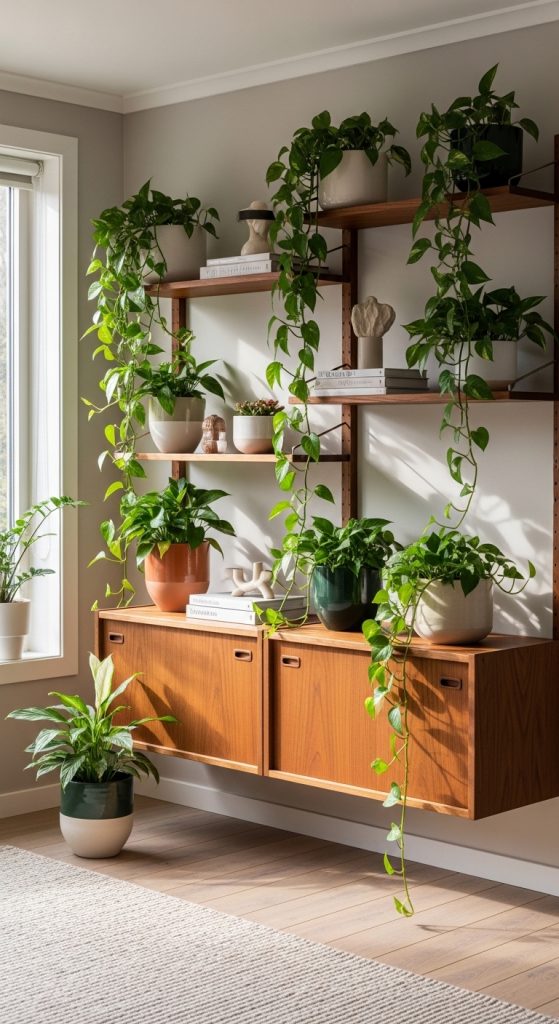
Plants add life, color, and natural texture to a wall unit.
Materials Needed
- Small indoor plants
- Ceramic plant pots
- Trailing plants like pothos or ivy
How to Style
Place small potted plants on different shelves throughout the unit. This helps create a fresh and organic feel.
Use trailing plants on higher shelves so the vines can cascade down naturally.
Choose neutral ceramic pots or mid-century style planters to maintain design consistency.
Plants help soften the structure of the shelving and make the display feel more dynamic.
3. Use Vintage Decor Pieces
Vintage décor fits perfectly with mid-century furniture.
Materials Needed
- Vintage clocks
- Retro cameras
- Small sculptures
- Antique books
How to Style
Select a few vintage pieces that complement the wood tones of the wall unit.
Place one statement item on each shelf instead of grouping too many together.
Allow enough empty space around each piece so it stands out as a focal point.
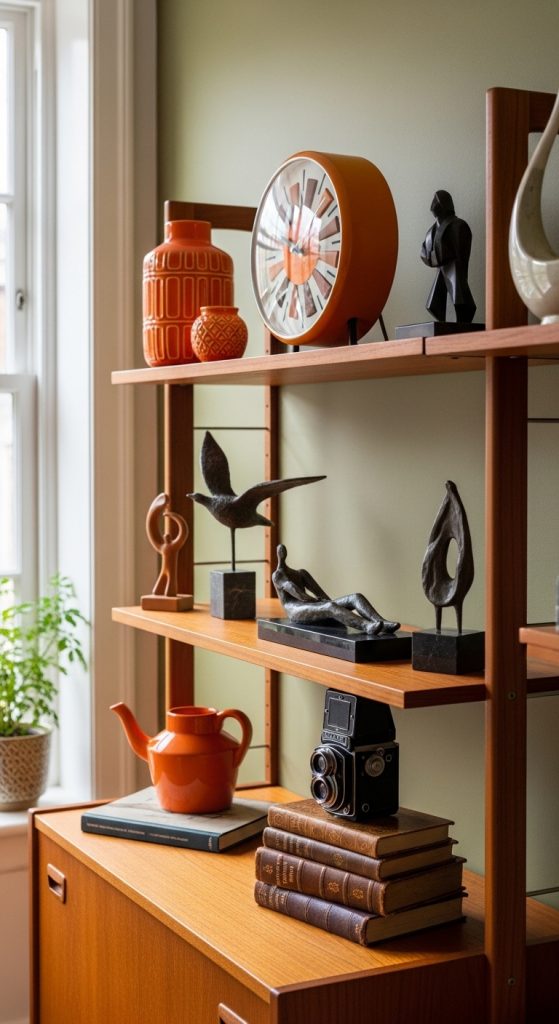
This approach highlights the retro charm of mid-century design.
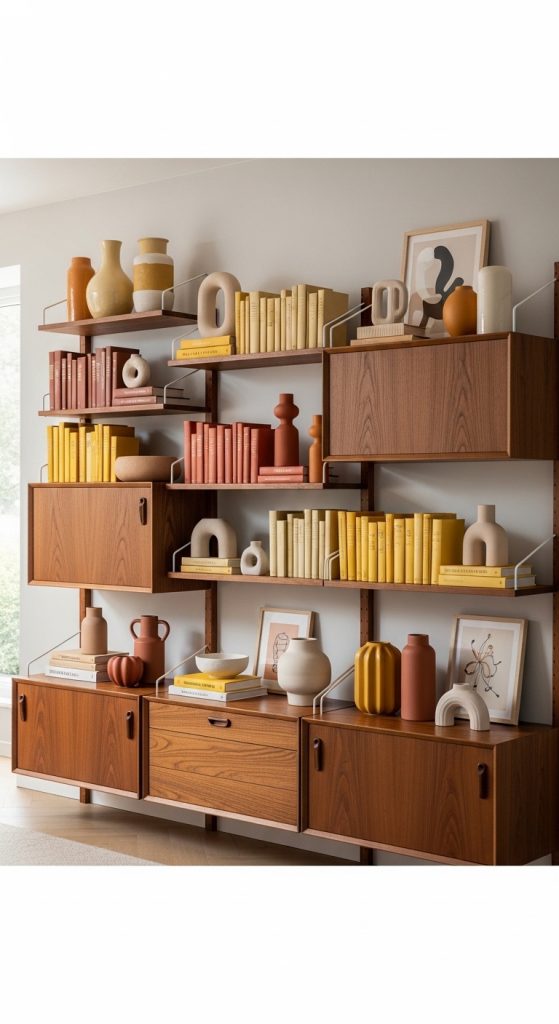
4. Create a Color Theme
Choosing a color palette helps make the display feel cohesive.
Materials Needed
- Decorative objects in similar colors
- Books with matching tones
- Ceramic pieces
How to Style
Pick two or three main colors that complement your room.
Arrange books and décor so the colors repeat across different shelves.
For example, you might use warm tones like terracotta, mustard, and cream.
Repeating colors throughout the unit creates harmony and visual flow.
5. Add Framed Artwork
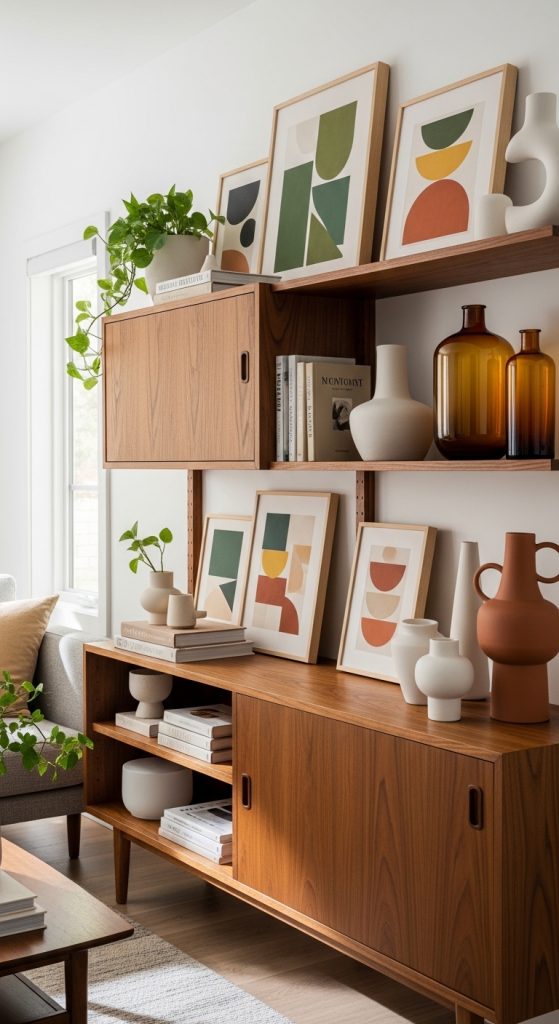
Artwork can add personality and depth to a wall unit.
Materials Needed
- Small framed prints
- Photographs
- Art postcards
How to Style
Lean small frames against the back of the shelves instead of hanging them.
Layer smaller frames in front of larger ones to create depth.
Choose artwork that complements the mid-century style, such as abstract prints or minimalist illustrations.
This technique adds character while keeping the styling relaxed.
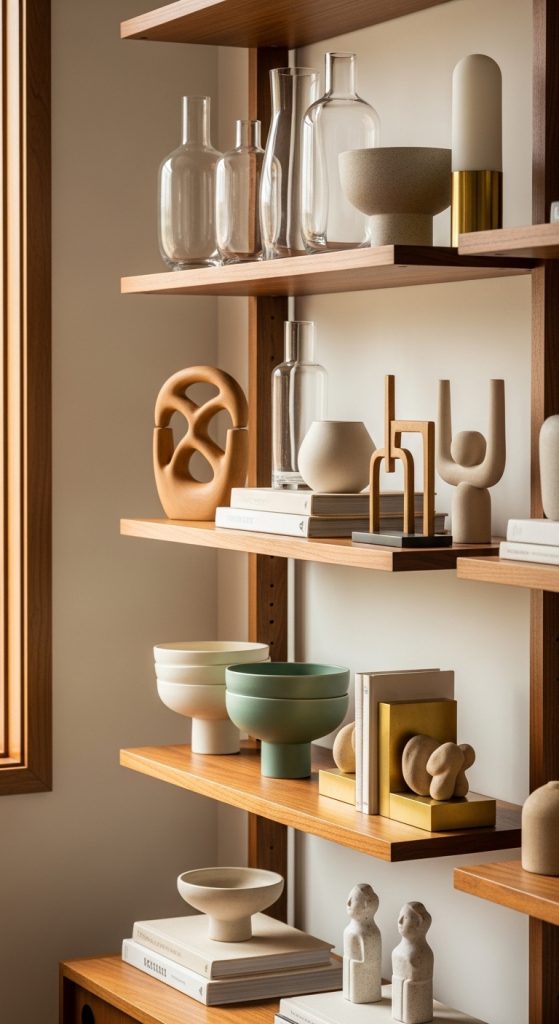
6. Mix Materials and Textures
Combining different materials makes the display more visually interesting.
Materials Needed
- Glass vases
- Ceramic bowls
- Wooden sculptures
- Metal accents
How to Style
Place objects made of different materials next to each other.
For example, pair a ceramic vase with a glass object and a wooden sculpture.
Mixing textures prevents the display from feeling too uniform.
This approach reflects the design diversity often seen in mid-century interiors.
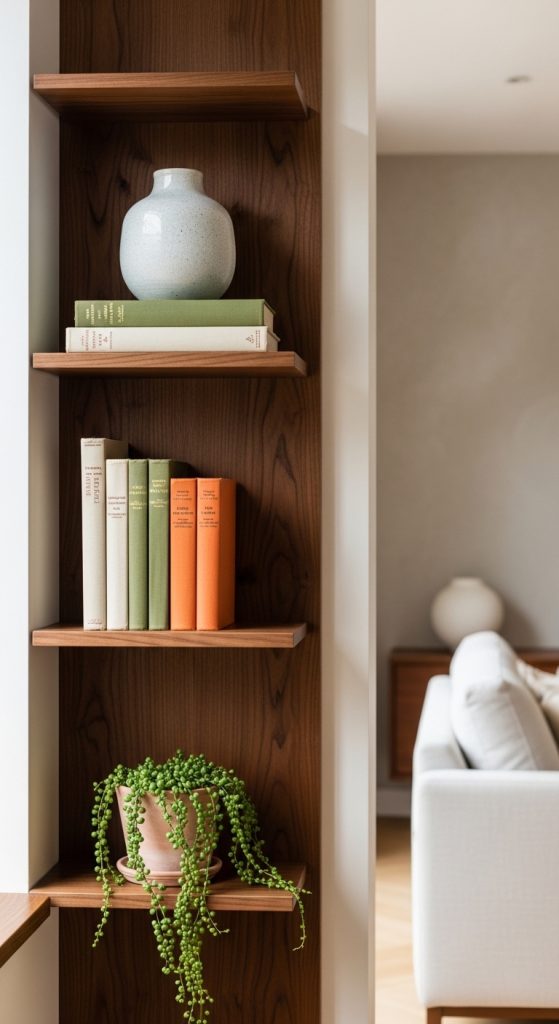
7. Create a Minimalist Look
Sometimes less is more when styling a wall unit.
Materials Needed
- A few decorative objects
- Books
- One or two plants
How to Style
Select only a few items and space them out across the shelves.
Leave some shelves partially empty to highlight the design of the wall unit itself.
Focus on symmetry and clean lines.
This minimalist approach emphasizes the elegant structure of mid-century furniture.
8. Use Decorative Storage Boxes
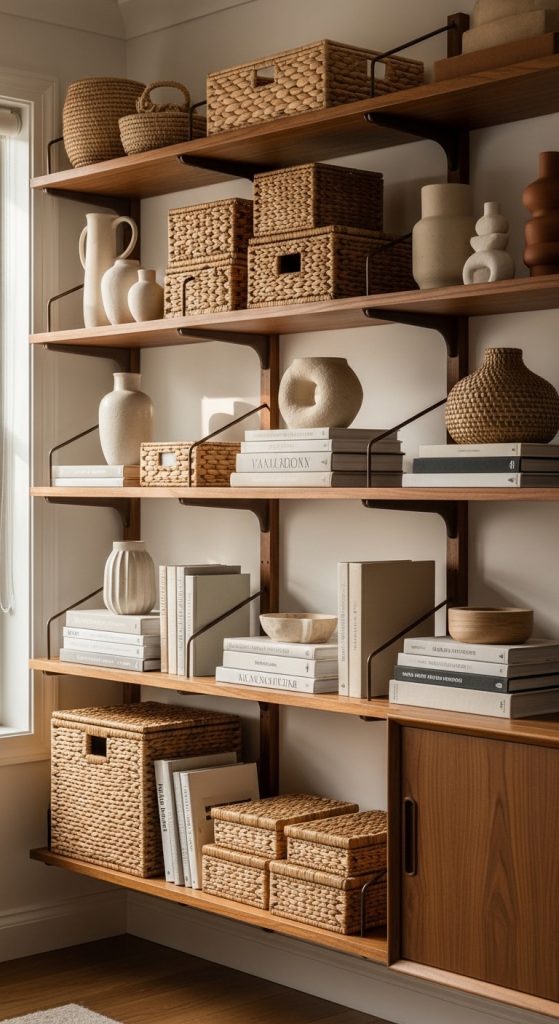
Storage boxes help combine function and style.
Materials Needed
- Decorative boxes
- Woven baskets
- Wooden containers
How to Style
Place storage boxes on lower shelves to hide small items.
Choose boxes with textures or colors that complement the wall unit.
Stack two boxes together for visual interest.
This keeps the space organized while still looking stylish.
9. Layer Objects at Different Heights
Varying heights helps create visual movement.
Materials Needed
- Tall vases
- Medium sculptures
- Small decorative items
How to Style
Arrange objects so each shelf has items of different heights.
Place taller pieces toward the back and smaller pieces in front.
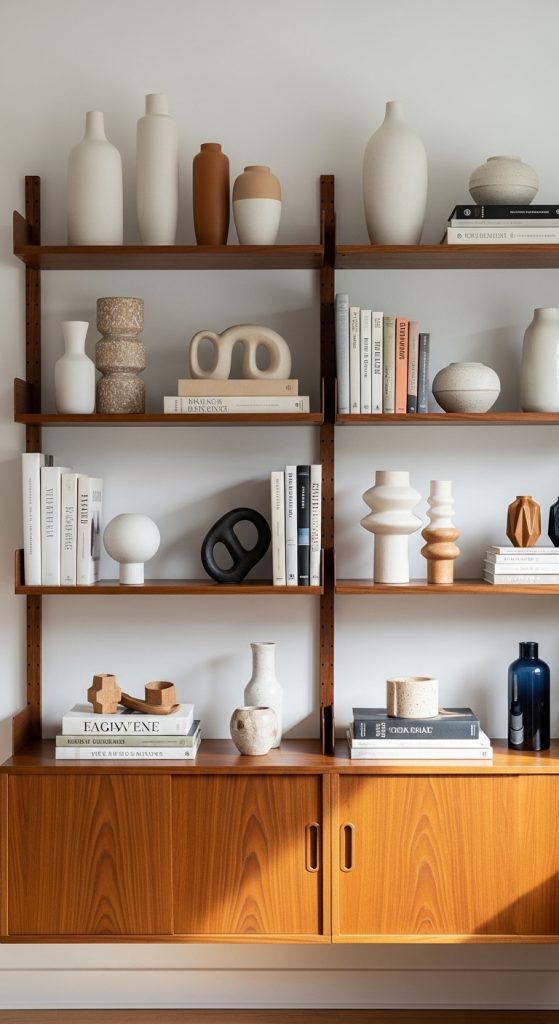
Avoid lining objects up in a straight row.
This layering technique makes the shelves feel more dynamic and curated.
10. Add Personal Touches
Personal items make the display feel meaningful and unique.
Materials Needed
- Family photos
- Travel souvenirs
- Handmade objects
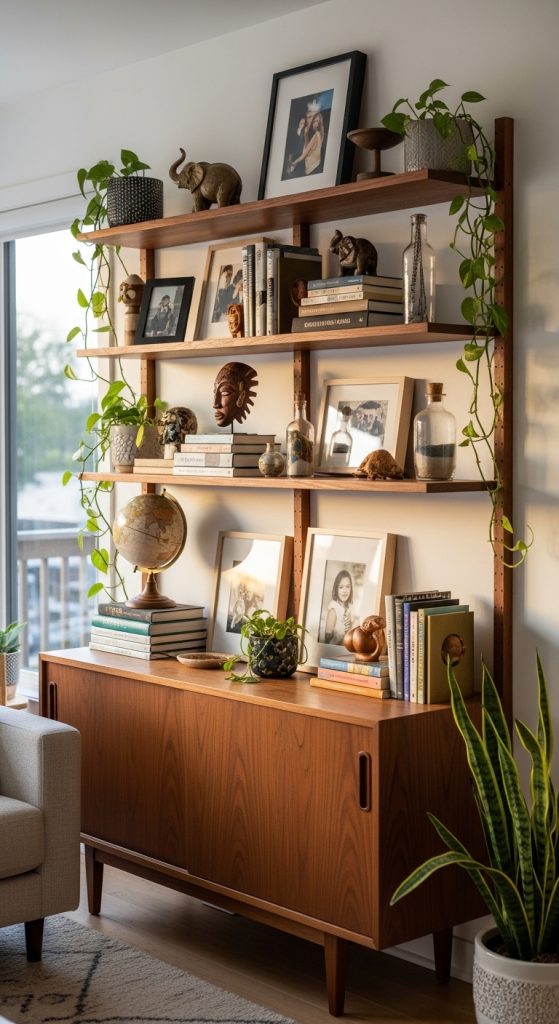
How to Style
Choose a few personal items that represent your interests or memories.
Mix them with books and decorative pieces so the shelves feel curated rather than overly personal.
Keep the arrangement balanced and avoid overcrowding.
Personal touches make the wall unit feel warm and lived-in.