Introduction Wall paneling is one of the most effective ways to transform an ordinary living room into a stylish, sophisticated, and visually interesting space. Whether you prefer a…
Wall paneling is one of the most effective ways to transform an ordinary living room into a stylish, sophisticated, and visually interesting space. Whether you prefer a modern minimalist interior, a cozy farmhouse atmosphere, or a luxurious traditional design, the right wall paneling can add depth, texture, and character to your home. Unlike plain painted walls, paneled walls introduce architectural detail that makes a room feel more thoughtfully designed.
The best part is that living room wall paneling comes in many styles and price ranges. You can choose classic raised panels, elegant board-and-batten designs, contemporary vertical slats, decorative geometric patterns, or affordable MDF panels painted to match your existing decor. Even a single accent wall can become a beautiful focal point without requiring a complete living room renovation.
When choosing wall paneling, consider the size of your living room, ceiling height, furniture arrangement, and overall color scheme. Light-colored panels can make a small room feel brighter, while darker finishes create a dramatic and intimate atmosphere. Natural wood adds warmth, and simple painted panels provide a clean, timeless appearance.
In this guide, you will discover 10 living room wall paneling ideas, along with suitable materials, styling tips, and practical ways to incorporate each design into your home.
Materials Used for Living Room Wall Paneling
Before choosing a paneling style, it helps to understand the materials commonly used for decorative walls. Your choice will depend on your budget, desired finish, installation method, and the conditions of your living room.
MDF panels: A popular choice for painted decorative wall designs, including board-and-batten and traditional panel molding.
Natural wood panels: Ideal for creating warm, textured walls with a timeless appearance.
Wood veneer panels: Provide the appearance of real wood with a thinner decorative surface.
Slatted wood panels: Suitable for contemporary interiors that benefit from vertical lines and texture.
PVC panels: Lightweight options available in different finishes; choose products appropriate for the intended indoor application.
Decorative wall molding: Useful for creating classic rectangular frames and elegant architectural details.
Plywood panels: Can create simple, modern, or natural wood-inspired designs when finished appropriately.
Paint and primer: Help coordinate painted paneling with the room’s existing walls and decor.
Adhesives and fixings: Must be compatible with the panel material and wall surface.
Always check the manufacturer’s installation instructions and account for electrical outlets, switches, doors, windows, and existing wall conditions before beginning work.
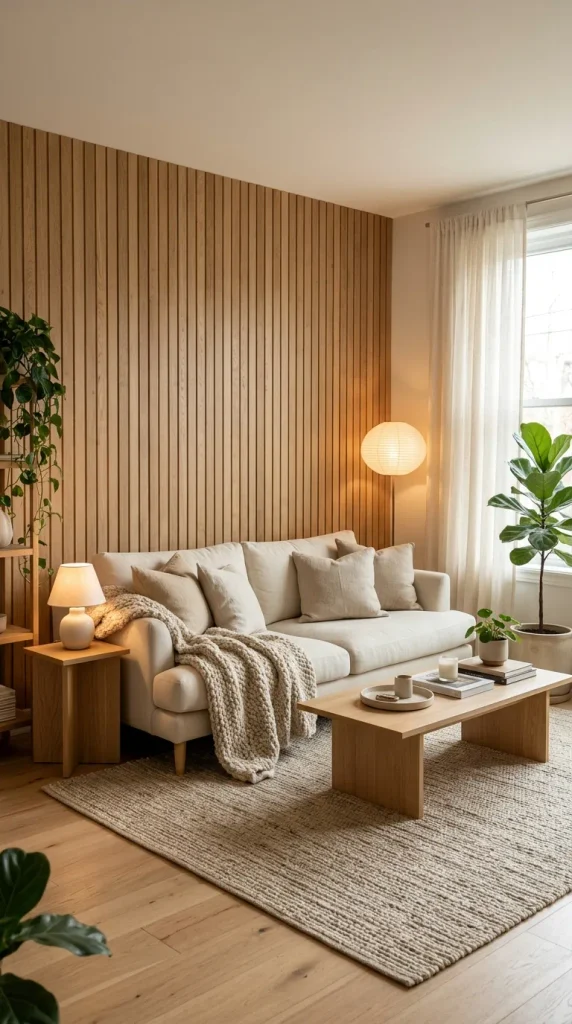
1. Modern Vertical Wood Slat Wall Paneling
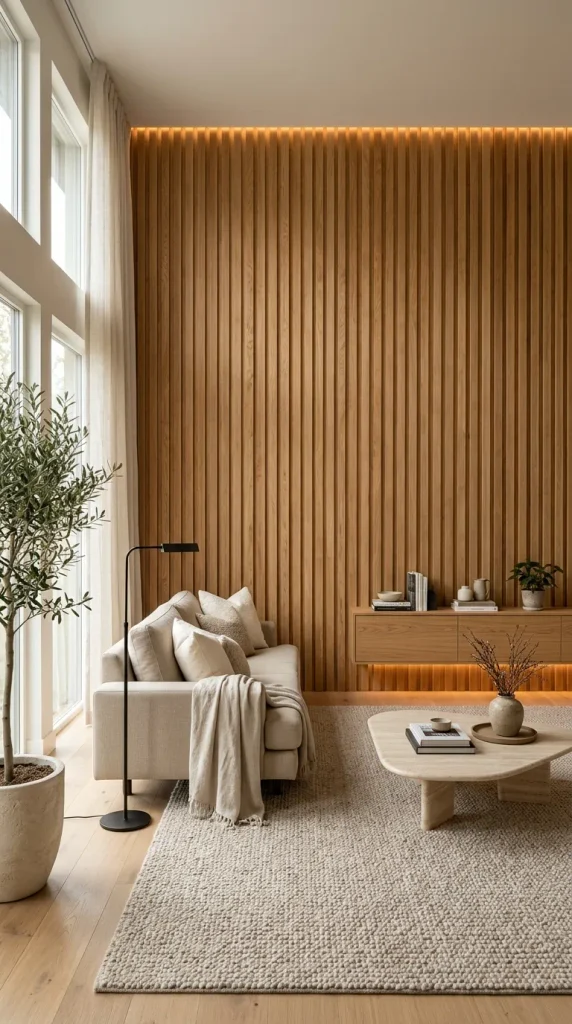
Modern vertical wood slat paneling is an excellent choice for homeowners who want to introduce texture and contemporary style into their living room. The narrow vertical strips create a clean architectural pattern that can make a room feel taller and more refined.
This design works particularly well behind a television, sofa, or entertainment unit. The vertical lines create visual interest without requiring complicated decorative patterns. Depending on your preferred style, you can choose natural oak, walnut, ash, or painted slats in a dark contemporary finish.
Natural wood tones bring warmth to a modern living room, especially when paired with cream upholstery, beige walls, and soft lighting. Dark walnut or charcoal finishes create a more dramatic appearance and work well with minimalist furniture and black metal accents.
For a balanced result, consider installing the slats on one feature wall rather than covering every wall in the room. This creates a focal point while allowing the remaining walls to stay visually calm.
You can also incorporate concealed lighting near the edges of the paneling to emphasize its texture. If installing slats behind a television, plan the position of cables and electrical outlets beforehand so the finished wall looks tidy.
Materials to use:
Wood slats or decorative slatted panels
Suitable wall battens or mounting system
Compatible fixings or adhesive
Measuring tape and level
Optional wood stain or protective finish
Optional indirect lighting
How to style it: Pair warm wood paneling with a simple sofa, a low-profile media console, neutral curtains, and a textured rug. Keep nearby accessories understated so the paneling remains the main feature.
This idea is ideal for contemporary homes, open-plan living spaces, and anyone who wants a modern accent wall with natural character.
2. Classic Board-and-Batten Wall Paneling
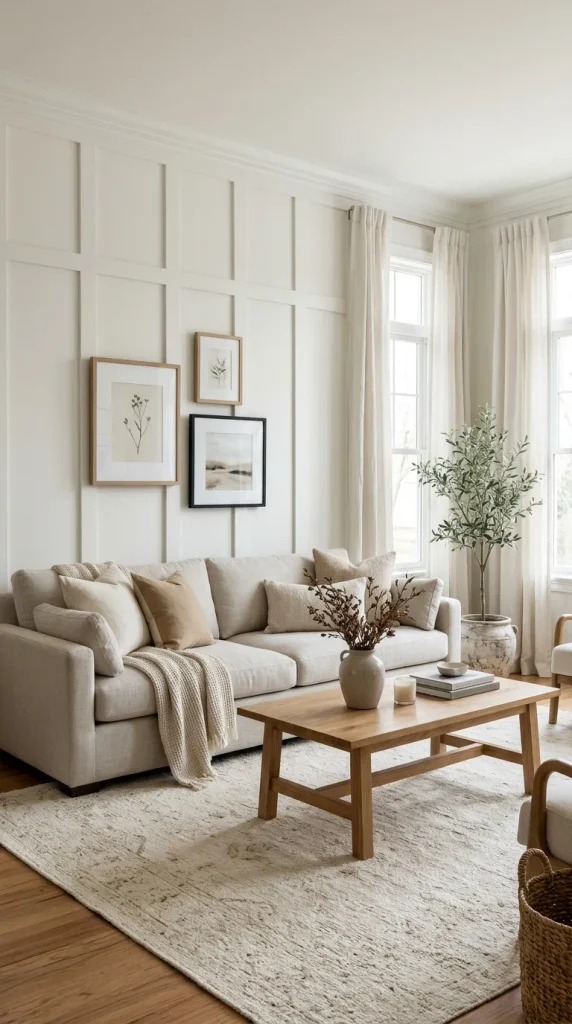
Board-and-batten paneling offers a clean, structured appearance that suits traditional, farmhouse, transitional, and modern living rooms. The design typically uses vertical battens arranged at regular intervals across a wall, sometimes with horizontal framing at the top and bottom.
One of the main advantages of board-and-batten is its versatility. You can create a simple, understated design with narrow battens or choose wider spacing for a more substantial architectural effect. The finished wall can be painted the same color as the surrounding walls or given a contrasting shade to make the paneling stand out.
White board-and-batten is a timeless option for bright living rooms. Warm beige, muted sage green, dusty blue, and soft gray provide subtle color without making the room feel overwhelming. For a more dramatic interior, deep green or charcoal can create a sophisticated background for light-colored furniture.
This style is also suitable for DIY projects because the design can be created with MDF strips or suitable timber molding. Careful measuring is essential to ensure the spacing remains consistent across the wall.
Before installation, inspect the wall for uneven surfaces and determine how the battens will meet corners, baseboards, and window or door trim. Fill nail holes and caulk appropriate gaps before painting for a seamless finish.
Materials to use:
MDF battens or suitable timber strips
Wall adhesive and fixings
Measuring tape and level
Saw and cutting tools
Filler and paintable caulk
Primer and interior paint
How to style it: Combine painted board-and-batten walls with a comfortable sofa, simple framed artwork, wooden furniture, and soft textiles. Matching the paneling to the wall color creates a subtle effect, while contrasting colors provide more definition.
This design is perfect for homeowners who want architectural detail without investing in expensive custom wall treatments.
3. Elegant Picture Frame Wall Molding
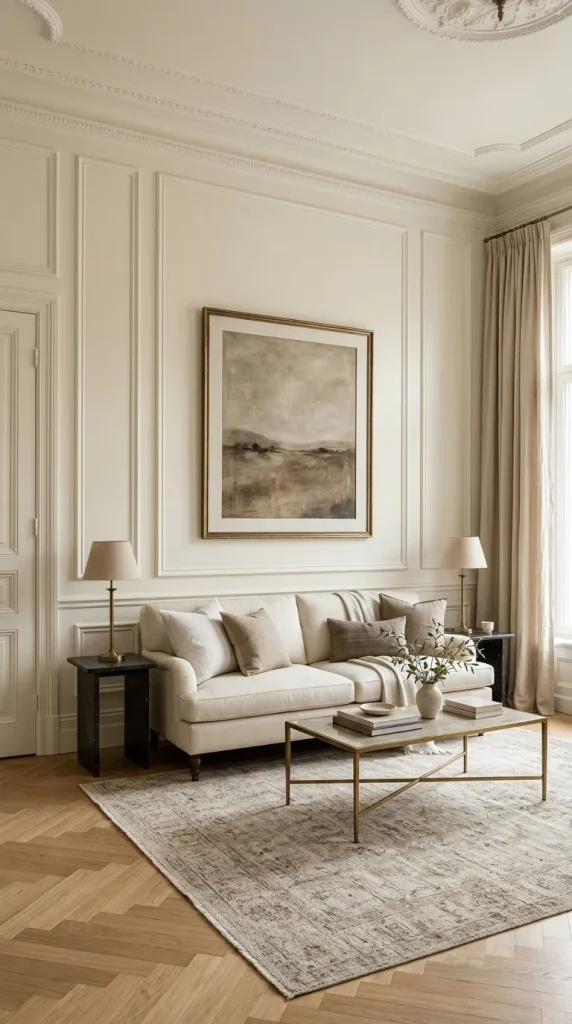
Picture frame wall molding is a sophisticated way to bring traditional architectural character into a living room. The design consists of rectangular or square molding frames arranged across the wall to create a balanced, symmetrical pattern.
This style is often associated with classic European interiors, but it can also work beautifully in contemporary homes. The key is to choose molding proportions that suit the room rather than using overly ornate details in a small or minimalist space.
For a timeless appearance, paint the molding and the wall in the same shade. White, ivory, pale gray, and warm beige create a refined, understated finish. If you prefer something more dramatic, use deep navy, forest green, or charcoal to create a statement wall.
Picture frame molding works especially well behind a sofa or along the main wall of a formal living room. It can also frame artwork, although you should plan the layout carefully so the artwork does not compete with the molding pattern.
To achieve a professional finish, measure the wall and sketch the arrangement before attaching anything. Keep the spaces between frames consistent and account for the height of furniture, switches, and outlets.
Materials to use:
Decorative wall molding
Measuring tape and level
Suitable adhesive and finishing nails
Filler and paintable caulk
Sandpaper
Primer and paint
How to style it: Pair the molding with elegant curtains, a classic sofa, a statement mirror, and coordinated table lamps. Choose furniture with simple lines if you want the wall detail to remain the main decorative feature.
This idea is ideal for traditional, transitional, and luxury-inspired living rooms that need a refined architectural finish.
4. Floor-to-Ceiling Wall Paneling
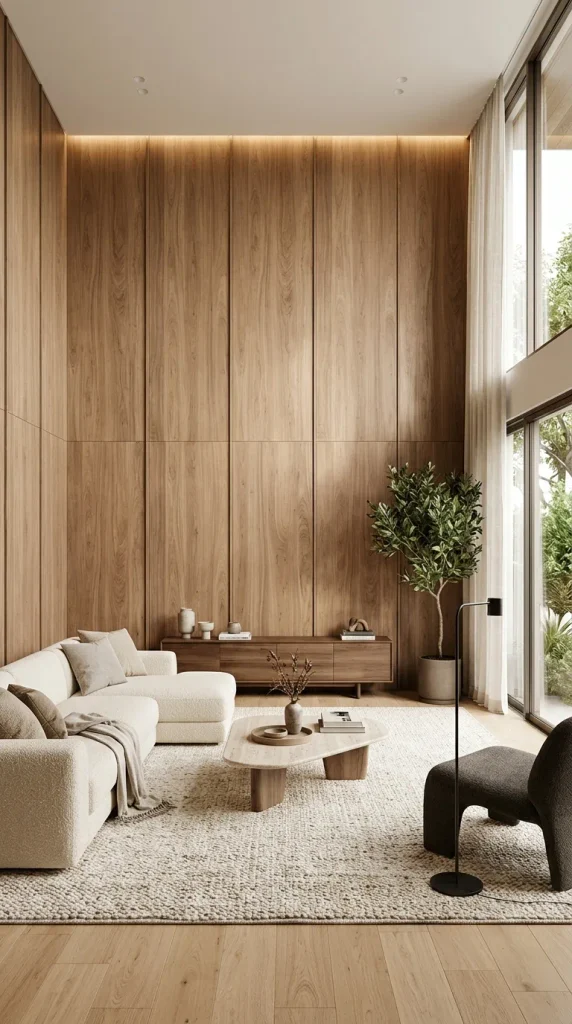
Floor-to-ceiling paneling creates a strong visual statement by extending the decorative treatment across the entire height of a living room wall. It can make a room look more cohesive, structured, and professionally designed.
The style works with many panel types, including vertical slats, flat wood panels, decorative molding, and painted MDF designs. The right choice depends on the room’s overall aesthetic. Vertical lines can emphasize ceiling height, while broad flat panels create a clean, uninterrupted appearance.
Natural wood floor-to-ceiling paneling is especially effective in modern living rooms where warmth is needed to balance concrete, glass, or metal finishes. Painted paneling, on the other hand, can blend seamlessly with the surrounding walls for a more subtle architectural effect.
If you are working with a smaller room, consider lighter colors or panels with simple profiles. Large, dark panels can create a dramatic look, but they may make a poorly lit room feel smaller. Good lighting and balanced furniture placement help prevent this.
Floor-to-ceiling paneling requires careful planning around skirting boards, ceilings, windows, and electrical outlets. Some panel systems may also need expansion allowances or specialized mounting methods, depending on the material.
Materials to use:
Full-height decorative panels
MDF, wood veneer, or slatted panel systems
Compatible mounting hardware
Measuring and cutting tools
Appropriate finishing materials
Optional integrated lighting
How to style it: Use a low-profile sofa and simple furniture to maintain visual balance. If the paneling is highly textured, choose a restrained color palette and avoid too many competing patterns.
This idea works particularly well in living rooms with high ceilings, contemporary layouts, and large feature walls.
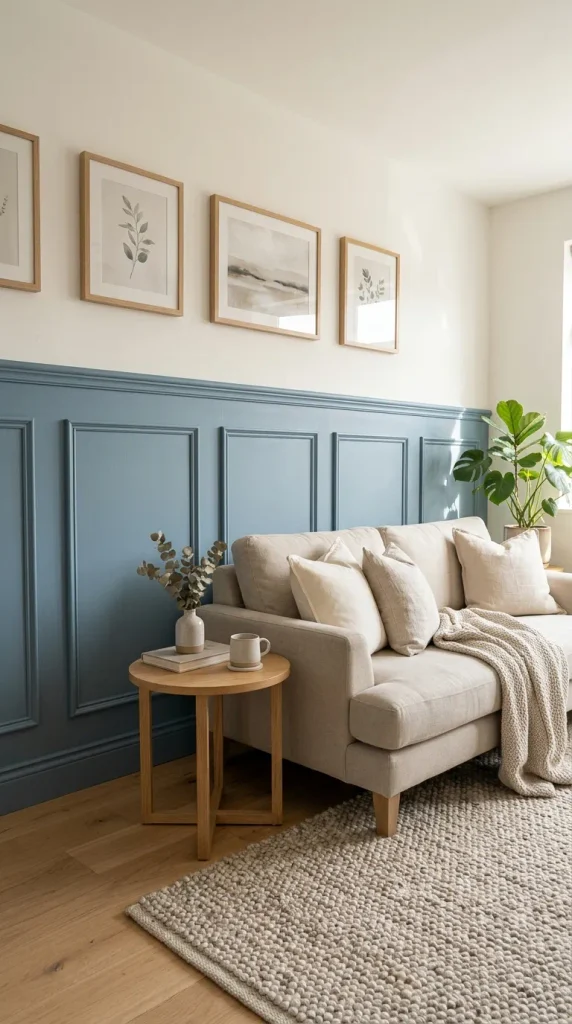
5. Two-Tone Wall Paneling for a Stylish Contrast
Two-tone wall paneling is a creative way to add depth and color to a living room without making the entire space feel busy. The design combines two complementary colors, often with a darker shade on the paneling and a lighter shade above it, or with contrasting colors across different sections of the wall.
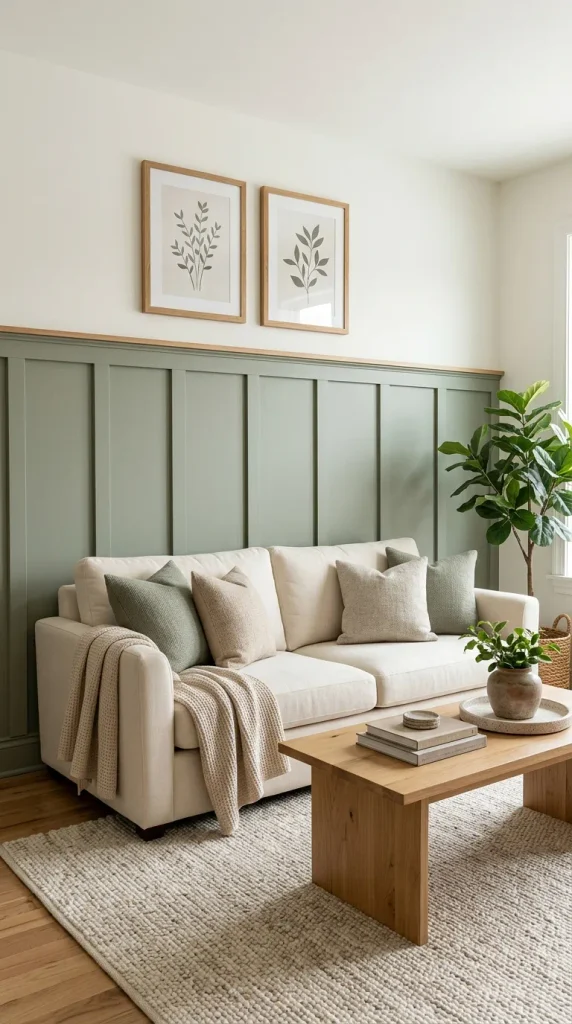
A popular approach is to install board-and-batten or rectangular molding across the lower portion of the wall and paint it a deeper shade. The upper wall remains lighter, creating a clear division that adds structure and visual interest.
For a calm, contemporary look, combine warm white with sage green, cream with taupe, or pale gray with dusty blue. If you prefer a bold interior, deep navy with soft white or forest green with warm ivory can create a striking contrast.
Two-tone paneling can also help define different areas in an open-plan living space. For example, a paneled wall behind the sofa can visually distinguish the lounge area from the dining space without requiring a physical divider.
The transition between the colors should look intentional. A horizontal molding rail can create a clean separation, while a simpler painted division may suit a modern interior.
Materials to use:
MDF panels or decorative molding
Two complementary paint colors
Primer and paintbrushes
Measuring tape and level
Painter’s tape
Filler and caulk
How to style it: Repeat one of the panel colors in cushions, artwork, or a rug to connect the wall with the rest of the room. Keep large furniture pieces relatively neutral if you want the paneling to stand out.
This design is a great choice for homeowners who want to introduce color and architectural detail on a manageable budget.
6. Geometric Wall Paneling for a Contemporary Living Room
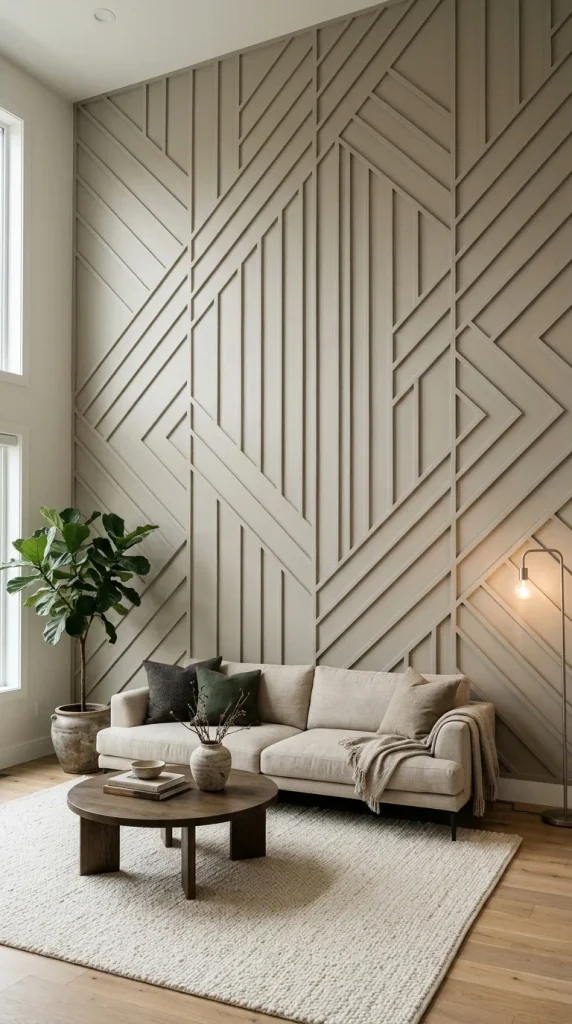
Geometric wall paneling introduces modern patterns through angled lines, intersecting shapes, and carefully arranged panels. It is an excellent option for homeowners who prefer a distinctive feature wall rather than traditional rectangular molding.
Depending on the design, geometric paneling can feel bold and artistic or subtle and sophisticated. Simple diagonal strips create movement, while larger geometric shapes offer a more architectural appearance. A carefully planned pattern can transform a plain wall into a focal point even when the rest of the room is minimally decorated.
Neutral colors are ideal if you want the pattern to feel timeless. Warm white, beige, soft gray, and natural wood finishes allow the geometry to provide the main visual interest. For a stronger statement, consider charcoal, deep green, or navy.
This design is especially effective behind a sofa or in a living room entertainment area. However, it is important to avoid making the pattern too complicated for the size of the wall. An overly dense arrangement can look cluttered and may compete with artwork or large furniture.
Before cutting the materials, draw the complete layout and measure each angle carefully. Symmetry, consistent spacing, and clean edges are essential for achieving a polished result.
Materials to use:
MDF strips or decorative panel boards
Measuring tape and angle-measuring tools
Saw and cutting equipment
Compatible adhesive and fixings
Filler and sandpaper
Primer and paint
How to style it: Keep nearby decor simple, with a streamlined sofa, understated cushions, and limited wall accessories. Let the geometric pattern serve as the room’s main design feature.
Geometric paneling is perfect for modern interiors and homeowners who want an accent wall that feels distinctive and creative.
7. Natural Wood Paneling for a Warm and Cozy Living Room
Natural wood paneling creates a warm, welcoming atmosphere that works particularly well in living rooms designed for relaxation. Its grain, texture, and natural color variations introduce visual depth that plain painted walls often lack.
Oak, walnut, pine, and other wood finishes each offer a different effect. Light oak and pale pine can make a room feel airy and Scandinavian-inspired, while darker walnut adds richness and a more traditional character.
You can use wood paneling across one wall or incorporate it into a larger design scheme. A natural wood feature wall behind the sofa creates a cozy backdrop, while panels around a media unit can make the entertainment area feel integrated into the room.
The finish is important. Matte or low-sheen finishes often emphasize the natural character of the wood without creating excessive glare. If you prefer a lighter look, select pale wood tones and combine them with white walls, neutral upholstery, and soft textiles.
Wood paneling can be more expensive than painted MDF, particularly when solid wood is used. Veneered panels or carefully selected timber alternatives may provide a similar appearance at a lower cost. Always compare durability, installation requirements, and finishing needs before making a decision.
Materials to use:
Natural timber or wood veneer panels
Appropriate mounting system
Wood stain or protective finish, if needed
Measuring and cutting tools
Compatible fixings
Optional indirect lighting
How to style it: Pair natural wood with cream cushions, linen curtains, a textured rug, and greenery. Keep the color palette warm and simple to create a comfortable, cohesive living room.
This design is ideal for Scandinavian, rustic, contemporary, and organic-inspired interiors.
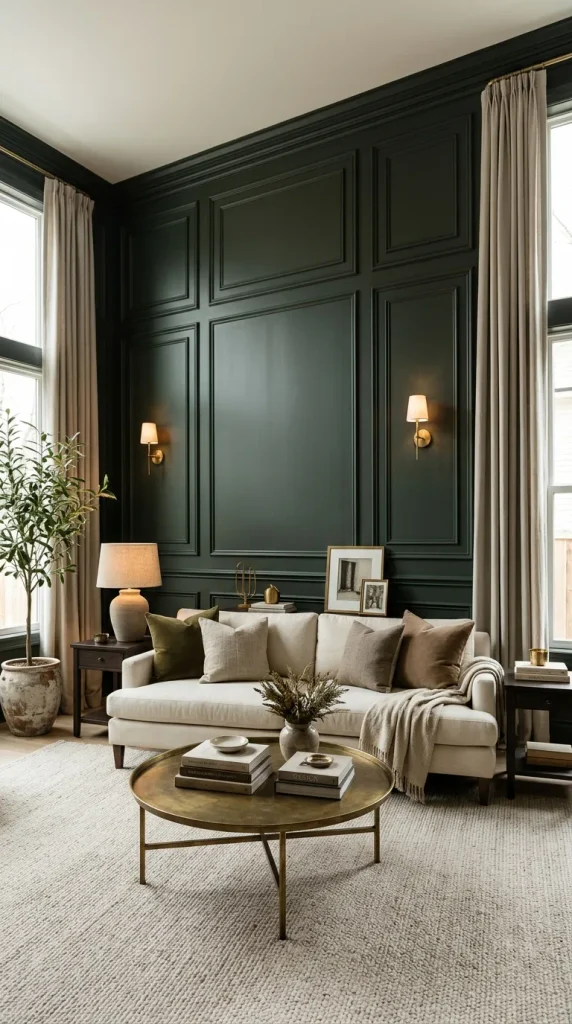
8. Dark Wall Paneling for a Luxurious Statement
Dark wall paneling can bring depth, drama, and sophistication to a living room. Shades such as charcoal, deep navy, forest green, and rich brown create a strong backdrop for furniture and decorative accessories.
This style works particularly well in larger living rooms or spaces with good natural lighting. However, it can also suit a smaller room when used thoughtfully on a single accent wall. The key is to balance the darker surfaces with lighter upholstery, reflective details, and sufficient lighting.
Raised panel molding painted in charcoal creates a classic, tailored appearance. Dark vertical slats provide a more contemporary effect, while smooth dark panels work well in minimalist interiors.
Lighting can enhance the richness of dark paneling. Wall sconces, floor lamps, and carefully positioned ambient lighting help reveal the panel texture and prevent the room from feeling flat. Metallic details in brass or bronze can introduce warmth, while cream textiles soften the overall contrast.
Before choosing a dark shade, test paint samples on the wall and observe them throughout the day. Colors can look very different under natural and artificial light.
Materials to use:
MDF panels or decorative molding
Deep charcoal, navy, or forest-green paint
Suitable primer
Sandpaper and finishing caulk
Paintbrushes and rollers
Coordinated lighting fixtures
How to style it: Use light-colored furniture, warm lighting, and a few metallic or wooden accents. Avoid filling every section of the wall with artwork, allowing the paneling to remain visually prominent.
Dark paneling is an excellent choice for homeowners who want a luxurious, dramatic, and polished living room.
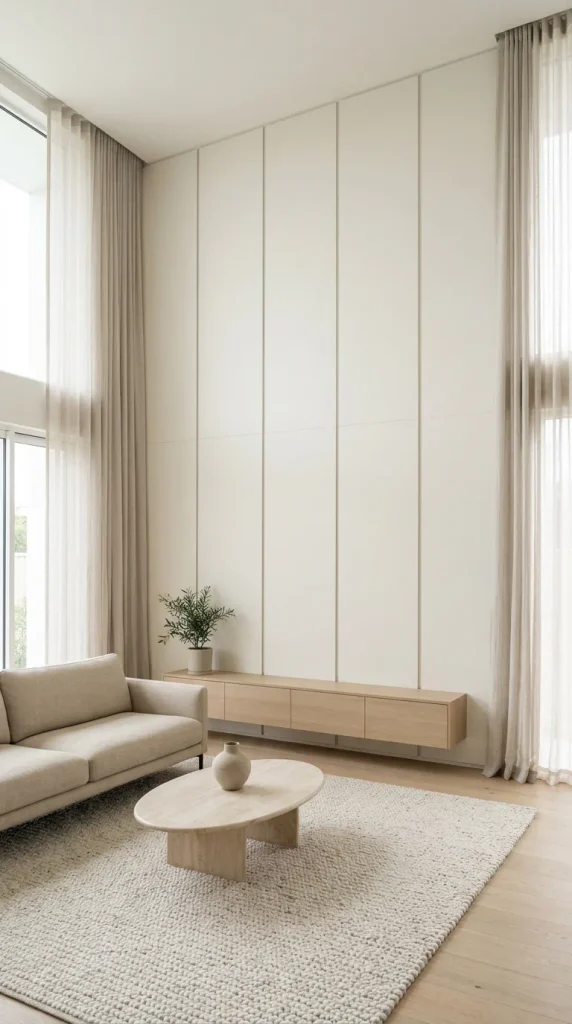
9. Minimalist Flat Paneling for a Clean Modern Look
Minimalist flat paneling is ideal for homeowners who prefer simple lines, subtle textures, and uncluttered interiors. Unlike traditional raised molding or elaborate geometric patterns, flat panels create a smooth, structured wall with minimal visual distraction.
This design works especially well in contemporary living rooms where the focus is on clean architecture, practical furniture, and a restrained color palette. Panels can be installed with narrow gaps or subtle shadow lines that emphasize their arrangement without creating a busy pattern.
Neutral colors such as warm white, beige, pale gray, and greige are popular choices. Matching the panels to the surrounding walls creates a seamless look, while a slightly contrasting shade adds gentle definition.
Flat paneling can be particularly useful behind a television because its simple design works well with modern media units and streamlined furniture. However, plan the placement of screens, cables, and outlets before installation to maintain a clean appearance.
Material selection is important. MDF and other engineered boards can provide a smooth painted finish, while wood veneer adds natural texture. Choose a product suitable for your wall conditions and intended finish.
Materials to use:
Flat MDF or veneer panels
Suitable mounting system
Measuring tape and level
Cutting tools
Primer and paint, if required
Compatible finishing materials
How to style it: Combine minimalist paneling with a streamlined sofa, simple curtains, a low-profile coffee table, and a limited number of accessories. Choose furniture with clean silhouettes to reinforce the contemporary look.
This idea is perfect for modern apartments, minimalist homes, and living rooms where simplicity is the main design priority.
10. Half-Wall Paneling for a Budget-Friendly Transformation
Half-wall paneling is one of the most versatile options for homeowners who want decorative detail without covering an entire wall. As the name suggests, the paneling typically extends across the lower portion of the wall, leaving the upper section painted or decorated separately.
This approach works beautifully with board-and-batten, rectangular molding, simple vertical panels, or traditional raised-panel designs. It can introduce architectural interest while keeping the upper part of the wall visually light.
The ideal height depends on the room’s proportions, furniture, and desired style. A common approach is to place the paneling around one-third to halfway up the wall, but it should be adjusted to suit the space rather than treated as a strict rule.
For a classic look, paint the lower paneling white and the upper wall a soft neutral shade. For a contemporary interior, try sage green, muted blue, or warm taupe on the lower section. A darker lower wall can also provide contrast behind a sofa, provided the room has enough light.
Half-wall paneling is often more economical than full-height treatments because it requires fewer materials and less installation work. It can also be easier to complete as a DIY project when the wall layout is straightforward.
Materials to use:
MDF strips or decorative panel molding
Suitable adhesive and fixings
Measuring tape and level
Paintable caulk and filler
Primer and paint
Sandpaper and cutting tools
How to style it: Pair half-wall paneling with neutral upper walls, simple artwork, and furniture that complements the panel color. Use consistent spacing and clean finishing to make the design appear professionally installed.
This is a practical option for budget-conscious homeowners who want to add charm and structure to their living room without undertaking a major renovation.
Tips for Choosing the Right Living Room Wall Paneling
Before committing to a design, consider how the paneling will work with the room’s dimensions, lighting, and existing furniture.
1. Consider the Size of Your Living Room
Large, elaborate patterns can become overwhelming in small rooms. Simpler vertical slats, minimalist panels, or half-wall designs may create a better balance. Larger living rooms can accommodate more substantial patterns and full-height treatments.
2. Choose Colors That Complement Your Furniture
Your wall paneling should work with your sofa, flooring, curtains, and existing decor. Neutral panels are versatile, while dark or bold colors can make an accent wall more distinctive.
3. Decide Whether You Want Texture or a Smooth Finish
Slatted wood and raised molding create visible shadows and depth. Flat panels offer a quieter, more contemporary appearance. Choose according to the atmosphere you want to create.
4. Plan Around Windows, Doors, and Electrical Outlets
Measure the wall carefully before buying or cutting materials. Consider how the panel pattern will finish around corners, door frames, switches, and outlets.
5. Match the Style to Your Home
Classic molding suits traditional and transitional interiors, while slatted wood and flat panels work well in modern homes. Geometric designs provide a more artistic focal point.
6. Set a Realistic Budget
Include the cost of panels, mounting materials, tools, paint, finishing supplies, and any professional installation. DIY can reduce labor costs, but only when the task is suitable for your skill level.
7. Do Not Ignore Wall Preparation
Repair loose plaster, investigate dampness, and make sure the wall can support the chosen panel system. Decorative paneling should not be used to hide unresolved moisture or structural problems.
Common Wall Paneling Mistakes to Avoid
Even a beautiful paneling design can disappoint if the proportions and installation are not carefully planned. Avoid these common mistakes:
Using the wrong panel scale: Oversized or overly detailed designs can overpower small rooms.
Ignoring consistent spacing: Uneven gaps can make decorative molding look unfinished.
Choosing colors without testing them: Lighting can significantly change how a paint color appears.
Overdecorating the feature wall: Too many accessories can compete with the panel pattern.
Using unsuitable materials: Some materials are not appropriate for damp walls or particular installation conditions.
Forgetting cable management: Media walls should be planned around electrical outlets and wiring before installation.
Skipping finishing work: Visible gaps, unfilled nail holes, and rough edges can undermine the final result.
Installing panels without checking wall conditions: Existing leaks, mold, and structural issues should be addressed first.
Conclusion
Living room wall paneling is a versatile way to add texture, architectural interest, and personality to your home. Whether you prefer the contemporary appeal of vertical wood slats, the timeless elegance of picture frame molding, the warmth of natural timber, or the simplicity of minimalist flat panels, there is an option for almost every interior style and budget.
For a modern living room, vertical slats and flat panels offer clean lines and understated sophistication. Traditional spaces benefit from classic molding and board-and-batten designs, while two-tone and geometric paneling provide more creative ways to introduce color and visual interest. If you want an affordable update, half-wall paneling can deliver an impressive transformation using fewer materials.
The most successful design is one that complements your room’s proportions, furniture, lighting, and existing decor. Plan the layout carefully, choose suitable materials, and pay attention to the finishing details. With thoughtful choices, wall paneling can turn an ordinary living room wall into a beautiful focal point that makes your entire home feel more polished and inviting.